After 13 years, Another March of Crises in US-Turkish Relations?
Thirteen years ago this month, Turkish-U.S. relations started to enter one of their most turbulent periods. Parliament’s decision not to allow the U.S. to launch its troops from Turkey was followed by several harsh statements from U.S. officials, including one that mentioned the “disappointment” of some U.S. officials in the lack of leadership in the Turkish military. Relations reached their lowest points on July 4 of that year after the infamous “hood incident” in which a group of Turkish soldiers was detained by the U.S. military. This severe turbulence and the hood incident left serious scars in relations.
The Turkish public reacted very harshly to the U.S. and started to feel increasing skepticism about U.S. policies in the region. While bilateral relations suffered from this turbulence, the U.S. was trying to control the situation in Iraq. Some members of the U.S. administration during this period started to point fingers at Turkey for the U.S.’s failure in Iraq. According to them, the absence of a northern front due to Parliament’s decision was mostly responsible for the emergence of the mess in Iraq. Blaming Turkey for this situation was considered a convenient but insufficient attempt to divert attention from self-made mistakes.
In the meantime, just as Turkey had predicted before the war, we started to see a major resurgence of PKK violence. While Turkey was trying to raise the issue of the PKK’s freedom of movement in northern Iraq, the U.S. administration preferred to prioritize its own security concerns. Despite frequently mentioned intelligence cooperation between the two states against the PKK, the lack of American resolve to fight against an organization that it recognizes as a terrorist organization generated a major crisis of trust between the two NATO allies. Although the two countries tried to fix the situation and resolve the problems later in then U.S. President George W. Bush’s second term, this crisis is frequently remembered when talking about potential threats to the future of bilateral relations.
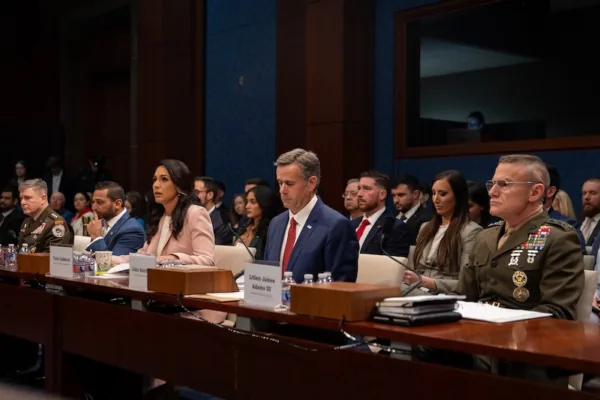
Now, 13 years after this episode of crises in Turkish-U.S. relations, we have begun to see similar turbulence in bilateral relations. This time, the primary focus of the case is Syria, not Iraq. In some circles in Washington, we started to see similar reactions to Turkey. There is again some disappointment regarding the state of the Turkish military establishment. Some I assume is from “the lack of leadership” in Turkish politics, but this time some also feel that disappointment or even frustration because Turkey did not use its military to intervene in Syria. When this frustration is expressed by some members of the administration whose main motto for Syria has been not to act or no boots on the ground, it shows that there is a serious issue between the two countries. The tactical divergences in the U.S. and Turkish positions at this point grow larger and deeper as the situation in Syria turns into one of the worst catastrophes of the century so far. As some already have predicted, just like the mess in Iraq led to the rise of al-Qaeda in the country, the trouble in Syria has led to the emergence of DAESH. While the two countries negotiated how to deal with the dual problem of DAESH and Syria’s Bashar Assad, we started to see two different trends in the U.S. administration. One, the position against Assad started to get murkier as statements from the administration started to be less consistent and clear and, two, under tremendous pressure from the Republican-controlled Congress for failing to assess the situation in Syria and the rise of DAESH, in most hearings we started to see administration officials say that Turkey is not doing enough. This was expressed as an issue of willingness, not capacity, to control a long and historically porous border. This brings to mind the “because of Turkey” agreements of 13 years ago. In the meantime, after 13 years the PKK continues to be a major problem for bilateral relations. This time, however, it was a PKK problem on steroids.
Thirteen years ago, Turkey criticized the U.S. for not doing enough to stop the PKK resurgence in northern Iraq and its attacks in Turkey. This time the U.S. started to support the PKK Syrian affiliate’s People’s Protection Units (YPG) militia in northern Syria by generating an artificial distinction between the two organizations. While the source of recruitment is Turkey and its leadership from the PKK, the U.S. administration assumed that the YPG would only fight against DAESH and started to militarily support an armed group it recognized as a terrorist organization by claiming that it is not the same organization. As many in Turkey predicted, it led to the resurgence of PKK attacks in Turkey. In the last two months, for example, the suicide bombers that attacked the Turkish capital at some point went to Syria and took part in similar operations. That a special U.S. presidential envoy can visit northern Syria and take pictures with members of this organization strikes many chords in the Turkish public that feels the terror of the PKK.
Of course, there are differences between these two crises, and of course the progression of turbulence was more different. However, what we see now are signals of major crises of trust between the two countries. If not contained and if it is sacrificed for an election year by the outgoing administration, the damage to bilateral relations will become deeper and more difficult to repair. Yes, there are solid military and security grounds for the future of relations. Both countries are members of NATO and both countries are members of the international coalition against DAESH. And most probably some degree of operational cooperation is taking place in the intelligence realm. However, what is seen now is very concerning for the future of Turkish-U.S. relations.
This article was first published in the Daily Sabah on March 28, 2016.
You may also like