Unlike US, Iran could assist Turkey’s war on terror
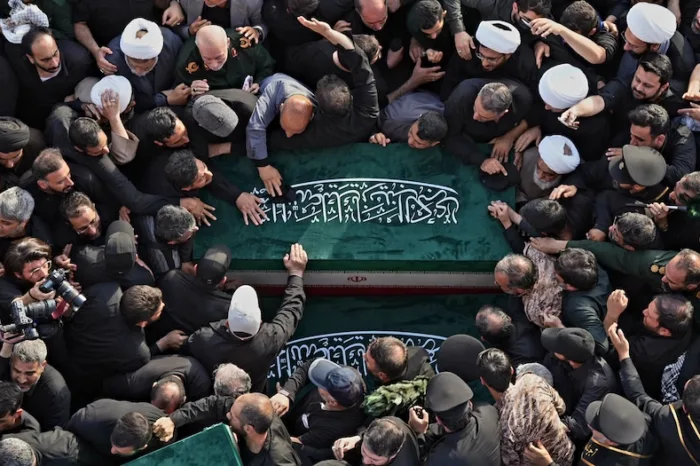
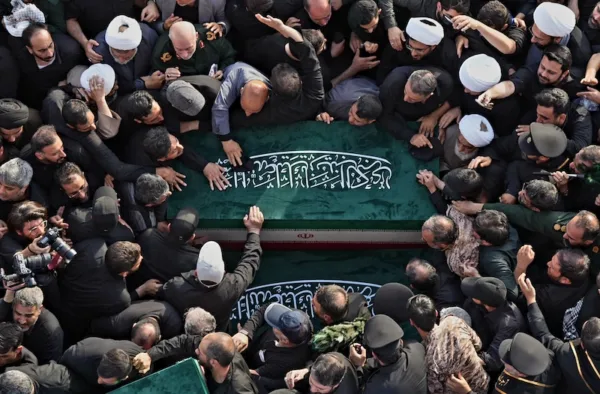
Following last week’s Friday prayers, hundreds of thousands of people in Iran took to the streets to voice their support for the regime and chant against Israel and the United States. This state of mobilization shows that the strategy to broker regime change through street protests won’t have an effect on Iran. Even if Tehran manages to crush the uprising, it is important to note that Iran’s social fault lines have been activated due to increased interaction between domestic politics and foreign policy.
The domestic issues are quite clear: The nuclear deal failed to facilitate much-anticipated recovery. The Revolutionary Guards are corrupt and have controversial influence over foreign policy and the economy. The lower classes are getting poorer. The government has been unable to implement reforms and the ruling elites are divided by internal rivalry. Meanwhile, the middle classes are sick of the regime’s ideologically-charged rhetoric and there is a general demand for liberalization. At the same time, Iran’s expansionist regional policy came with a heavy price tag and the various ethnic groups remain unsettled.
Turkey’s opposition to Iran’s expansionist policies does not preclude its objection to outside intervention and instability
Perhaps more important is the fact that Iran has foreign enemies that are determined to exploit its domestic vulnerabilities – the United States, Israel, Saudi Arabia, the United Arab Emirates and others.
Those countries haven’t been open about their desire to broker “regime change” in Iran. Instead, they have been talking about containing Tehran’s regional expansionism. Even the Trump administration, which is determined to target Iranian interests in the Middle East, has been reluctant to discuss regime change. As Kılıç Buğra Kanat posits, the neo-cons within the administration prefer to use instruments, which would lead to regime change, without identifying their ultimate goal.
Meanwhile, the realists stick to “containment.” How the plan will be implemented, however, remains unclear. Keeping in mind Washington’s failures in Iraq and Afghanistan, the American people will be reluctant to support the administration’s plans to “promote democracy” and engage in “nation-building.” To be clear, the U.S. lacks the financial resources and the necessary military footprint in the Middle East to accomplish their goal. Nor does it seem possible for Washington to form a Western coalition, provided that the European Union is determined to uphold the nuclear deal and opposes any steps that could destabilize Iran. As such, the only alternative is for the United States to exploit the ambitions of regional players with limited means.
Iran’s enemies consider the country an “exporter of terrorism” and “a dangerous power that destabilizes the region.” In a recent interview with Voice of America, U.S. Vice President Mike Pence identified Iran as “the leading state sponsor of terrorism in the world.” In contrast with former President Barack Obama’s “deafening silence” during the 2009 protests, he added, U.S. President Donald Trump provided the kind of support to the Iranian people that Ronald Reagan did with his “evil empire” speech.
“My hope is that the people who are taking in the streets embrace a free and democratic future,” Mr. Pence said.
Notwithstanding this discourse of “liberalization,” the Trump administration will primarily impose economic sanctions on Iran. At the same time, there has been talk about eliminating Tehran’s proxies in the Middle East and decapitating the Shiite militias. According to media reports, there were plans in place for the assassination of Qassem Soleimani by the United States and Israel and it’s only reasonable to assume that the CIA’s anti-Iran director has been working on more black ops. Finally, mounting pressure on the Revolutionary Guards, accompanied by a campaign to tell the Iranian people that the regime is an unbearable burden, could be an option.
At this point, Turkey’s position bears particular importance. Whether the Trump administration would seek Turkey’s support to contain Iran against the backdrop of major strains in Turkey-U.S. relations remains unclear. Ankara cares about regional stability and security. As a matter of fact, the Turks repeatedly declared in recent days that “external intervention” and “instability” were not welcome. The various sources of instability in Pakistan, Afghanistan and Iran, coupled with Washington’s thinly-veiled threats, raise concerns in the Turkish capital. To make matters worse, it appears that the U.S. has no intention to break the gridlock in bilateral relations – which is caused by Washington’s support for People’s Protection Units (YPG) militants and the Gülenist Terror Group (FETÖ). By contrast, Tehran could potentially offer to work together in a range of areas including the fight against the PKK-YPG.
This article was first published by Daily Sabah on January 8, 2018.
You may also like