‘Any Given Sunday’: The clash of nationalism and multiculturalism at the Super Bowl
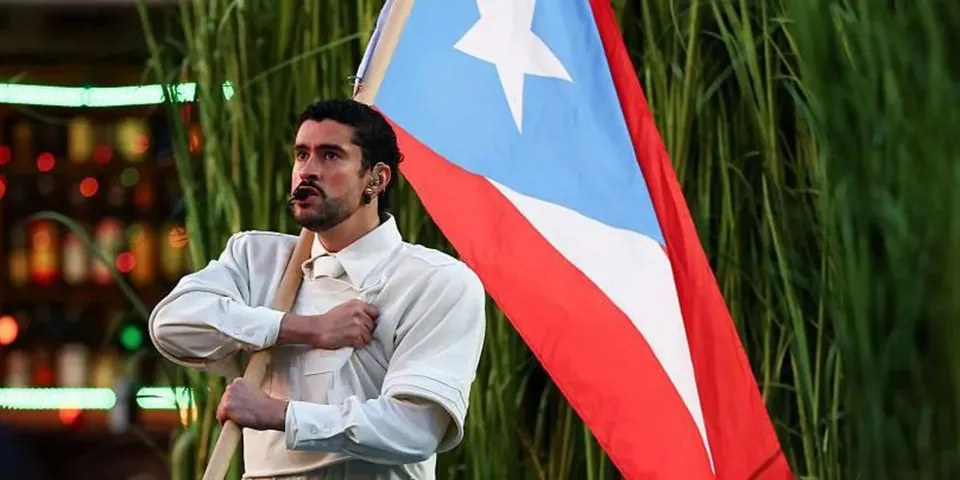
The Super Bowl carries a meaning far beyond being the final game that determines the American football champion. In addition to being a social and cultural celebration ritual, it also corresponds to one of the iconic moments of the show business industry. In recent years, as the Super Bowl has become one of the main fronts of social polarization, the announcement that Puerto Rican rapper Bad Bunny would perform this year’s halftime show had already made it clear that a political message would be delivered. With a show performed almost entirely in Spanish during the final of American football—perhaps the world’s most ‘American’ sport—Bad Bunny, who reminded America of the multicultural nature of its identity, drew the reaction of conservative white America.
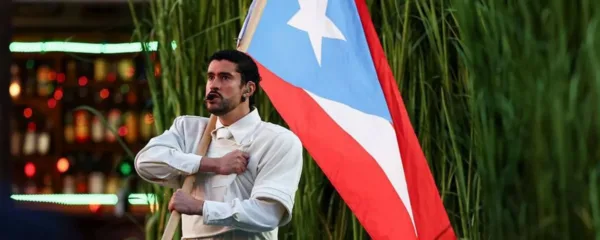
As if arguing that America is not limited to the United States, the artist concluded his performance alongside the flags of all countries in North and South America, making headlines with subtle references criticizing Trump’s nativist and nationalist immigration policy. The fact that Trumpist conservatives prepared an alternative show in response to the performance, which sought to convey the message that Latin American culture is an inseparable part of America, showed that the country’s identity conflict continues at full speed. The competition between rival shows reflecting two different visions of America indicates that, during the Trump era, the struggle between white America’s narrow nationalism and multiculturalism has become a societal fault line.
AN AMERICAN CLASSIC
American football, the subject of many classic films such as Jerry Maguire, The Blind Side, and Any Given Sunday, has provided Hollywood with ample material on themes such as class differences, racism, the ruthlessness of the capitalist sports industry, the true face of the American dream, social mobility, and political power struggles. American football has become an expression of masculinity, physical strength, endurance of hardship, and nationalism adorned with military symbols. Football, one of the most important elements of American small-town and rural culture, also enables university teams to gain significant economic power through sponsorship and spectator revenues. Having become a phenomenon that can be examined from many angles, from the social origins of players to the power of the media industry, American football is one of the most prominent expressions of the country’s imagination of itself as a ‘hero who achieves the impossible.’
American football is a sport that has little social and cultural relevance outside the U.S., and in this sense, precisely as an expression of ‘American exceptionalism,’ it is also a source of pride for nationalist narratives. It has become customary for not only football fans but all of America to watch the Super Bowl, the name of the final at the end of the six-month season and playoff period. Transformed into a full-blown consumption feast with family and friend gatherings, parking lot barbecue parties, first-time commercial breaks, and the halftime show, the game has also become a cultural phenomenon where American identity is celebrated. However, in recent years, the question of what this American identity entails and how it should be celebrated has become the subject of major debates, reflecting the country’s political polarization. America’s most traditional Sunday entertainment has begun to turn into a stage where social division is confronted and identity conflicts are attempted to be repaired.
THE NEW FRONT OF POLARIZATION
In 2016, Colin Kaepernick’s kneeling during the national anthem to protest police brutality and racism, and the fierce debates it sparked, brought the issue of racial justice to the national agenda while deepening the divide between conservatives and liberals. Trump, who harshly criticized this incident coinciding with the presidential campaign period, declared such protests anti-American, arguing that they were against symbols like the flag and anthem. After the incident ended his professional career, Kaepernick launched a major advertising campaign with Nike and engaged in projects against police violence and for social justice. The event, which brought many debates to the agenda—from athlete-politics relations to race policies, from national identity to the National Football League’s restriction of free speech due to commercial concerns—made the content of halftime shows and commercials during this major sporting event much more sensitive.
In Oliver Stone’s film Any Given Sunday, starring Al Pacino and his famous ‘inch by inch’ speech, American football is portrayed not only as a sports struggle won on the field but as the stage of a fierce power struggle between big capital, media power, and cultural identities. Similarly, last Sunday’s Super Bowl gave the feeling of a cultural arena where two different visions of America collided. The halftime show is no longer just sports entertainment; it has turned into a symbolic referendum where the boundaries of American identity are being defined. This referendum points to a choice America must make between cultural integration and identity conflict. Al Pacino’s words, ‘We heal as a team or we will die as individuals,’ stand out as a metaphor summarizing this critical juncture. The message Bad Bunny showed on the ball to the cameras at the end of his performance—‘Together, we are America’—can also be read as a similar call for integration.
Kaepernick’s criticism that national symbols mask America’s racial problems resembles Bad Bunny’s criticism that the content of American identity is being reduced to a single identity. Both emphasize that the American dream is not the same for every race and ethnic origin, arguing that national identity must be conceived much more broadly. Opposing them stands the Trumpist nationalist line, which insists on the sanctity of American national symbols and argues that America must return to the core values of the dominant white Anglo-Saxon class. It is difficult to predict whether this identity struggle will have a clear winner. However, the fact that a classic American cultural entertainment like the Super Bowl has become one of the newest fronts of political polarization shows that America’s identity conflict has permeated every aspect of life.
February 10, 2026 / Yeni Safak
You may also like