Easy to Start, Hard to End: The U.S. Predicament in the Iran War
One trait many American presidents share is an unwarranted confidence that once they start a war, they can end it whenever they want. In 1965, President Lyndon Johnson and War Secretary Robert McNamara expected to win the Vietnam War within a reasonable timeframe. President Richard Nixon came to power in 1968 promising to end the war, yet he did the opposite — expanding it by opening a Cambodian front. The United States ended up fighting for eight years a war it understood it would lose in its very first year. It finally withdrew from Vietnam in 1973, accepting defeat. That loss left a deep mark on the American psyche — what became known as the Vietnam syndrome.
The Bush administration similarly failed to foresee that the wars in Iraq and Afghanistan would cost the United States nearly two decades and trillions of dollars. Just one month before the Iraq War began, War Secretary Donald Rumsfeld said the following: “It could last six days, six weeks. I doubt six months.” Despite that optimism, the Iraq War lasted a full eight years, with its costs exceeding three trillion dollars.
The same overconfidence appeared in Trump’s own statements and in War Secretary Pete Hegseth’s remarks about the Iran operation. When reporters asked Hegseth how long the war would last, he replied: “You can say four weeks, but it could be six, it could be eight, it could be three,” Hegseth said. “Ultimately, we set the pace and the tempo.” Those words suggest history may be repeating itself. America’s long record of wars that were easy to enter but took years to finish points toward a familiar pattern playing out once again with Iran.
The Pressure Test of Global Energy Prices
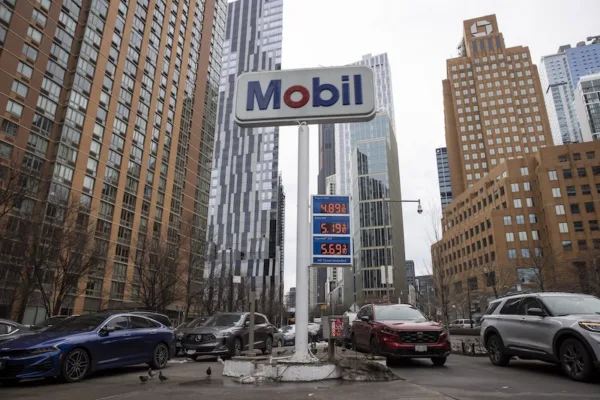
Now approaching the end of its third week, the U.S.–Iran war has already laid bare how badly Washington miscalculated. Those who did not take Iran seriously as a military threat have been met with unexpected resistance. Even the hawks — those who supported military action under virtually any circumstances — have had to confront the possibility that this may not have been the best option, given the rising oil prices, the mounting casualties, and the pace at which years of American logistical and diplomatic investment in the region are being spent down. The spike in Brent crude prices has pushed U.S. gas prices up more than twenty percent at the pump. The closure of the Strait of Hormuz, strikes on Iranian oil facilities, and the subsequent roughly sixty percent drop in oil production from Qatar, the UAE, Bahrain, Kuwait, Saudi Arabia, Jordan, and Oman have all added to the chaos.
One of the most consequential developments driving pressure on global energy markets has been the limited strikes on Kharg Island — the most critical component of Iran’s oil export infrastructure. Because most of Iran’s coastline is shallow, this deepwater island is the single chokepoint through which roughly ninety percent of the country’s oil exports pass. Taking it out of commission would directly cut off Iran’s oil sales, making it a strategically valuable target powerful enough to inflict serious economic pain on the regime. Yet the U.S. military’s restraint in not fully disabling the island — despite its willingness to strike infrastructure in violation of international law — is not an oversight. Any post-war Iranian government will need to export oil to function, and that requires Kharg to remain operational. Completely destroying the island would undermine the viability of a future pro-American, Shah-style Iranian government — and reduce the economic returns the United States expects to get from regime change.
Iran’s Eroded Deterrence, America’s Miscalculation
Beyond the leverage Iran has been able to exert through energy markets, the war has also failed to go the way the United States expected militarily. During the joint Israeli-American operations inside Iran in 2025, Iran had been unable to mount a serious response. Proxy forces like Hamas and Hezbollah took heavy losses while Iran proved unable to protect them from Israeli strikes. Senior military officials and nuclear scientists, including Quds Force commander Qasem Soleimani, were killed in targeted assassinations. Hamas Political Bureau Chairman Ismail Haniyeh was killed on Iranian soil. Iran did not meaningfully push back against any of these escalation steps, which fed the perception that its deterrence had significantly eroded. With that backdrop, and emboldened by the success of the Venezuela operation, President Trump calculated — using gunboat diplomacy to weigh his military options — that striking Iran would not impose serious costs on the United States or Israel. That calculation turned out to be wrong.
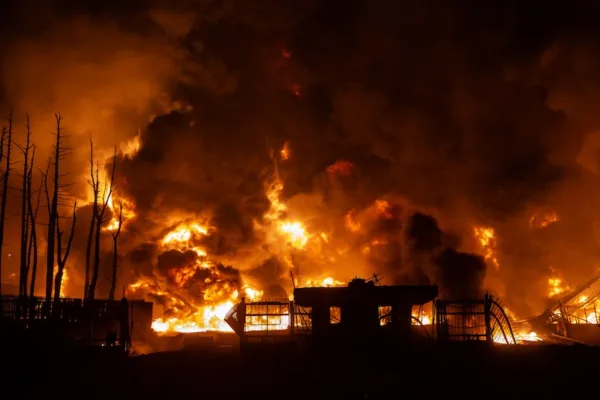
Iran struck a wide range of U.S. military facilities across the region with missile and drone attacks, including Al Udeid Air Base in Qatar, the U.S. Fifth Fleet headquarters in Bahrain, Al-Udairi in Kuwait, and Harir Air Base in northern Iraq, damaging the defensive architecture the United States has built up in the region. More critically, Iran chose to hit Gulf states and U.S. assets first rather than going after Israeli territory directly, spreading the war across a much wider geography. That move exposed two important realities: the Gulf states saw that the American security umbrella might not cover them even when Israel is under fire, and that hosting U.S. bases had made them targets themselves. These are countries that partnered with Washington specifically to be protected from Iran — and they ended up getting hit anyway, in a war they had been actively trying to mediate before it started. This may go down as a turning point at which the Gulf states began to seriously reassess the terms of their near-unconditional support for the United States and Israel.
The fact that Iran can still strike American assets in the region, that it can do so at relatively low cost, and that it is fighting on its home turf does not mean it is winning — but it does mean its capacity to sustain the fight remains intact. Tehran’s resistance in this context can be understood as existentially motivated. The collapse of the Islamic Republic would likely cost regime insiders not just their power, but their lives and assets as well. It is reasonable to argue that one of the reasons the Revolutionary Guards’ senior leadership keeps fighting, even after absorbing significant losses, is that they simply have no other choice.
The Risks of a Prolonged War
A protracted war puts several compounding risks on the table for the United States. The first is logistics and resupply: rapidly depleting munitions stocks, rising operational costs, and the structural vulnerabilities of supply lines that stretch to the other side of the world all raise serious questions about America’s ability to sustain a prolonged campaign. This situation also gives Russia and China an opportunity to wear down U.S. strategic reserves in the context of great-power competition. The second risk is escalation. If air and missile operations alone are not enough to bring Iran to the negotiating table, the United States may find itself having to consider a ground invasion — a step that would push both the human cost and regional instability to a qualitatively different level. The third and perhaps most long-lasting risk is the entrenchment of a fragmented security environment. As command structures break down, new armed groups drawing on former Revolutionary Guards networks could multiply, making both the management of the conflict and the construction of any post-war order extraordinarily difficult. The experiences of Iraq and Libya make clear just how durable and costly the power vacuum that follows the collapse of central authority can be.
The war has been costly for both sides. The United States has not achieved any of the objectives it publicly stated when it went in: ending Iran’s nuclear program, neutralizing its ballistic missile capacity, changing the regime, and bringing freedom to the Iranian people. Iran, meanwhile, is fighting from a strategic position that was already weak when the war started and has only gotten worse since. In the conflict resolution literature, this kind of situation is called a “mutually hurting stalemate” — a condition that, in theory, opens a window for negotiation. But on the ground the situation looks different: both sides still have the capacity to inflict further damage on the other, which reduces the urgency to come to the table. The U.S. strikes on Iranian desalination infrastructure are one concrete example of this escalatory dynamic. If Iran were to do the same to Gulf states, the consequences could be catastrophic. Qatar, for instance, gets sixty-one percent of its drinking water from desalination plants. If Iran chose to take those out, it could cause an unprecedented humanitarian disaster across the region.
On the Iranian side, there is no clear breaking point on the horizon that would force the regime to give in. The new Supreme Leader, Mojtaba Khamenei, took office having lost most of his family in U.S. strikes. A loss that personal is far more likely to harden his resolve than to make him open to compromise. At a more structural level, the regime is fighting what it sees as an existential battle: surrendering power would mean not just a political loss for its members, but a real threat to their lives and their assets. For its part, the United States has not yet accumulated enough military gains to justify a clean exit from the war. If President Trump were to try to end it through one of his characteristic sudden reversals, there is no guarantee that Iran would stop hitting American targets and Trump would have to explain to the American public why he started this war in the first place. That said, Trump has a history of selling his own inconsistencies to his base. An abrupt pullback that would be unthinkable coming from any other president does not seem impossible when Trump is the one making the call.
Conclusion
The current picture points, above all, toward further escalation. While both War Secretary Hegseth and President Trump have insisted they can end the war whenever they choose, the fact that none of the stated American objectives have been met makes that increasingly hard to claim. At the same time, Iran’s belief that it was attacked because it had lost its deterrence has reinforced the conviction among its leadership that it needs to walk away from this conflict with something concrete — above all, a restored deterrent against future Israeli military action.
Sustaining the war is difficult for the United States too, not just for Iran. Keeping a large force supplied and supported from the other side of the world is a serious burden on its own, and the dozens of U.S. military installations within range of Iranian missiles are a constant source of operational pressure. If the war drags on, the Strait of Hormuz will likely stay closed, oil prices will remain high, and the pressure on global markets will deepen. The fact that the United States has become a major oil producer offers only limited protection here: in a free market, crude trades at global prices, and there is no mechanism to shield American consumers — and voters — from a price spike. The blowback from a global supply shock into the U.S. economy is unavoidable, and as inflation picks up, the domestic political pressures on the Trump administration will intensify.
Under these conditions, Iran has strong strategic reasons to keep the war going. At the same time, a U.S. withdrawal is not a realistic option, since it would leave Israel alone to face Iran. So unless something comes along that fundamentally changes Iran’s strategic calculus — a full regime collapse, irreversible damage to its military capacity, or an internally driven breakdown along the lines of the Venezuela model — the conditions for ending this war in the near term are not yet in place. All of this points to the same conclusion: there are more reasons for this war to continue than to end. That, in turn, exposes just how shaky the assumption was that the Trump administration would be able to wrap up the conflict it started on its own timeline.
You may also like