Reclining or retrenchment: What will be the US’s new foreign policy?
Before the election in the U.S., I wrote about what this election meant for the international system. Since roughly the last year of the Bush administration we have witnessed a new debate in international relations regarding the “decline of the U.S.” and its possible ramifications for the international system. The Iraq War and the economic crisis that erupted in the U.S. following the bankruptcy of Lehman brothers are considered the end of what some called the “unipolar moment” in the international system. Of course it was not the first time that American power and its capability to influence things was called into question. After the Vietnam War, after the Watergate scandal and even after the Soviet Union sent the first person into space, there has been debates about the decline of the U.S. However the debate has been in full swing since the end of the Bush era and the first couple years of the Obama presidency we. It was not just the relative decline of the U.S.’s economic and political power in the relative balance of power that was on the agenda. Infrastructure, education, slowing innovation and even popular culture were demonstrated as possible indicators of the “American decline.” This decline also meant a significant change in the international system.
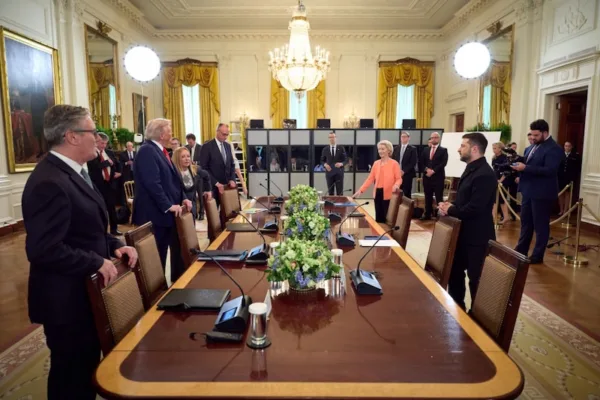
The kind of foreign policy the new U.S. administration adopts will be the new topic of debate with Donald Trump’s presidency
Some analysts considered this situation normal and even welcomed the development, from a historical point of view. There have been predictions claiming that the decline will include a period of burden sharing and even a peaceful transition of power. Accordingly, it was part of the inevitable rise and decline of superpowers around the world. However for others, this process was reversible in the sense that, despite the decline in the relative power of the U.S., in total, the U.S. was still the only super power in the world. Some called this new world order “uni-multipolarity.” This debate went on throughout the Obama presidency. In some sense the U.S.’s light footprint in the world during this period was considered recognition of this declining status of the U.S. Some called it a “reclining” foreign policy, while others called it “retrenchment,” both of which have taken place in different instances throughout modern U.S. history.
Now, with the Donald Trump presidency, there will be new debates about in what kind of international system the new U.S. policy will perform in regards to this changing world order. It is tricky business formulating foreign and security policy for a country like the U.S. while the system that it established decades earlier faces significant challenges from different threats, real and perceived, as well as different international actors. On the one hand, the position of being the sole super power in the world brings certain privileges for the U.S. and on the other hand it has very significant responsibilities. In the two-month period of transition, Trump will decide whether he wants to continue to “the retrenchment” or move toward a more “reclining” status. In his earlier statements despite his assertions about challenging the challengers of the U.S., including China, there was emphasis on what we call burden sharing. The definition of his main slogan, “make America great again,” was never clarified. In the next several months we will see if he means making America great in the international system or making America great in America. Different international actors in international relations have been waiting warily for what the final position of the Trump presidency will be in regards to the U.S.’s role. This role will not only influence U.S. politics and economics but will have serious repercussions on the actions of other actors in the international system. Thus Trump’s decision about the U.S.’s role may be part of a significant transition to a more multipolar world. His picks for foreign policy and the security team in this transition period will give the first signals to the answer for this critical question.
This article was first published in Daily Sabah on November 18, 2016.