• Publications
    • Books
    • Opinions
    • Analyses
    • Reports
  • Events
  • About
    • SETA DC
    • People
  • US-Türkiye Relations
  • Washington Gündemi
  • Contact
  • info@setadc.org
    202-223-9885
    1025 Connecticut Ave NW
    Suite 410
    Washington, DC 20036
  • Publications
    • Books
    • Opinions
    • Analyses
    • Reports
  • Events
  • About
    • SETA DC
    • People
  • US-Türkiye Relations
  • Washington Gündemi
  • Contact

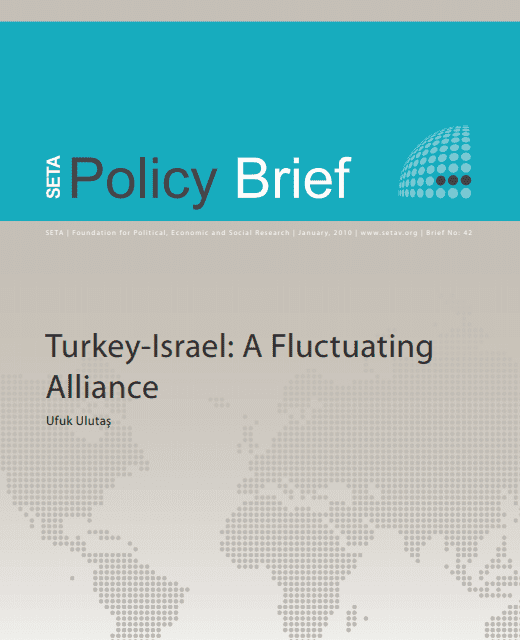
Turkey-Israel: A Fluctuating Alliance

SETA Foundation SETA DC Posted On January 4, 2010
0


By Ufuk Ulutaş

SETA Policy Brief, January 2010

Download the Brief
When Turkish-Israeli relations were formalized in March 28, 1949, Turkey became the first Muslim state to recognize the state of Israel; however, relations were kept at a minimum level for decades. From 1949 to the early 1990s, relations were very fragile and followed a fluctuating pattern. This pattern was replaced by the “honeymoon years” starting from the late 1990’s. The late 1990s marked by the soft coup of 1997, also known as the “February 28 Process,” constituted an exception in the pattern and level of relations between Turkey and Israel. Since 2000, relations regained its historically fluctuating pattern and this continues to characterize the nature of relations between Turkey and Israel today.

 The Israeli attack on the Gaza Strip in 2008 is a turning point in Turkish-Israeli relations. During the period from the Gaza attack to Ehud Barak’s recent Turkey visit, Turkey’s Israel policy has been consistent and well-organized, while Israeli policies toward Turkey can be characterized as chaotic and disorganized. The mise-en-scène of the most recent “chair crisis” is a clear indicator of this disorganization and chaos. The bigger picture of the crisis between Turkey and Israel suggests a structural difference between the two countries’ foreign policy orientations and visions regarding the future of the Middle East. The Turkish-Israeli relations would continue to fluctuate without Israel’s willingness to deal decisively with the key issues of peace in the Middle East, such as the settlements, status of Jerusalem, and Lebanese and Syrian tracks, and most urgently, the improvement of humanitarian conditions in Gaza.
  • Recent

    • “Strategic Implications of the Iran War” panel...
      March 30, 2026
    • ‘Any Given Sunday’: The clash of nationalism and multiculturalism...
      February 11, 2026
    • America’s Search for a Grand Strategy
      January 2, 2026
    • Türkiye Messages From the Trump-Netanyahu Press Conference
      December 30, 2025
    • A Window of Opportunity in Türkiye-U.S. Relations
      December 19, 2025
    • The End of the American Century? Interdependence, Soft...
      June 9, 2025
    • Trump-Netanyahu Relationship Takes a Turn for the Worse
      May 30, 2025
    • Why Is Trump Bypassing Israel?
      May 30, 2025
    • Israel’s plan to involve the United States in the occupation...
      May 30, 2025
    • Private Roundtable With Turkish Deputy FM Nuh Yılmaz
      May 20, 2025

  • Washington Gündemi

    • ABD Ucuz Drone Üretimi İçin Alternatif Arıyor
      April 17, 2026
    • Papa- Trump Kavgası 
      April 17, 2026
    • ABD, Rusya’ya Tanınan Petrol Muafiyetini Kaldırdı
      April 17, 2026
    • ABD-İran Müzakereleri Devam Ediyor
      April 17, 2026
    • İran Savaşı’nın Ara Seçimlere Etkisi 
      April 10, 2026
    • Adalet Bakanı Bondi Görevden Alındı
      April 10, 2026
    • Trump, Avrupa’dan Asker Çekmeyi Planlıyor
      April 10, 2026
    • ABD ve İran İki Haftalık Ateşkes İlan Etti
      April 10, 2026
    • Doğumla Vatandaşlık Yargının Gündeminde
      April 3, 2026
    • Krallara Hayır Protestoları
      April 3, 2026


Stay Updated


© Copyright 2018-2022 SETA Foundation at Washington DC
Press enter/return to begin your search