Biden’s bumpy road in US foreign policy
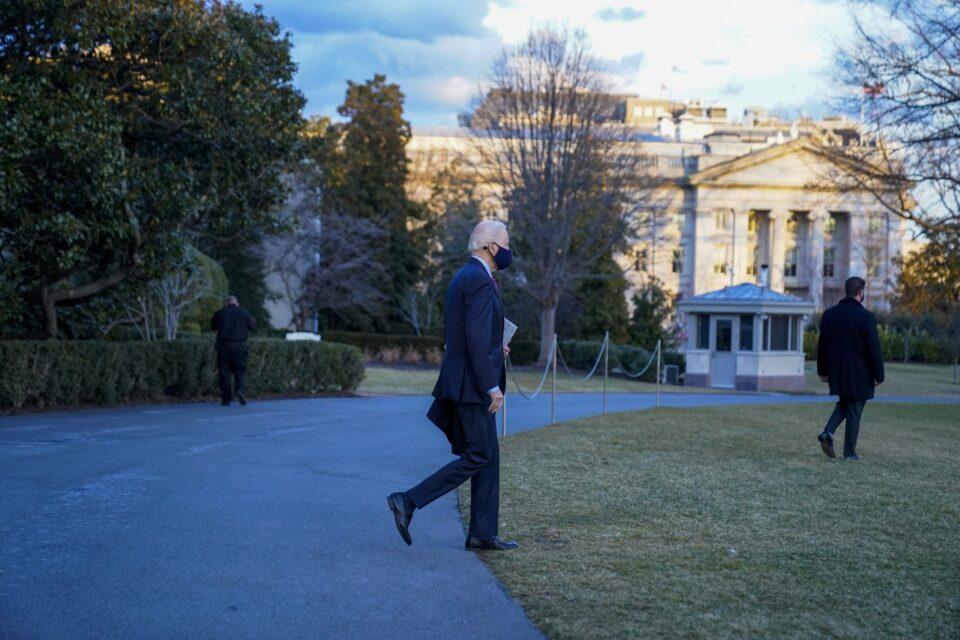
U.S. President Joe Biden recently made his first foreign policy speech since his inauguration on Jan. 6. In an approximately 20-minute address to State Department personnel, there was not any unexpected move or position.
At least for the last three months, we have seen similar talking points from the different names in his administration. The main tenets of this position are more or less clear.
However, there is no clarity about how to reach these goals and a lot of questions about the sustainability of these goals in the midst of several different domestic crises in the U.S., including the pandemic, the economic crisis, the racism crisis and rising “Trumpism.”
First of all, the Biden administration seems to like the “America is back” concept. There are too many unknowns about this concept.
On the one hand, the “America is back” concept may not be in line with the new world dynamics.
As in a recent letter by Josep Borrell, the EU commissioner on foreign policy, the world is not the same world and countries are not the same countries. Thus, when the U.S. happens to come back, it needs to pay attention to the changes and adapt its arrival to the changing power dynamics, evolving crises and emerging expectations.
On the other hand, it is still not known which America is coming back. What is the America of Biden’s imagination? Is it the America of post-World War II that led the establishment of most of the international institutions?
Is it the America of post-Cold War that highlighted “a new world order” but could not really establish it? Is it the America of post-Iraq War that provided “hope” but could not deliver it? Or is it a totally new America, a responsible stakeholder of the international system?
Furthermore, how long will this America last? Will the changes to U.S. foreign policy that the Biden administration plans to make be sustainable?
Secondly, there are a lot of unknowns about the expectations from the allies. During his statement, Biden mentioned multiple times that the U.S. will work with its allies and partners around the world.
Lack of credibility
However, there is a significant erosion of confidence and trust in the U.S. among the U.S. allies. The responsibility of this critical erosion does not lie on former U.S. President Donald Trump.
Even before Trump’s presidency, the Barack Obama and Biden administration contributed to this deterioration of the relations between the U.S. and its allies.
Now before going back to work together with its allies, the U.S. needs to take some confidence-building measures in order to improve standing among its allies.
The U.S. needs to understand that alliance relations is not a one-way street. The U.S. diplomacy, which Biden values so much, needs to recognize that the U.S. needs to develop effective mechanisms to resolve the disputes and disagreements with its allies.
It is unavoidable that the U.S. foreign policy will have differences and divergences with its allies in different critical crisis areas in the coming years.
It is imperative for the administration to develop mechanisms to resolve those differences through diplomacy. Threatening allies with sanctions and using language that contradicts the spirit of the alliance will not resolve the problems.
The concepts and words that Biden used during his recent statement sound promising for a new U.S. foreign policy; however, it is now enough to say these words.
It is also critical to understand the expectations of other countries and to show that the U.S. understands the changing world and will adapt to these changes.
This article was first published by Daily Sabah on February 8, 2021.
You may also like