Allies in Ankara: Beyond the Post-Cold War Order, Navigating the Age of Strategic Uncertainty
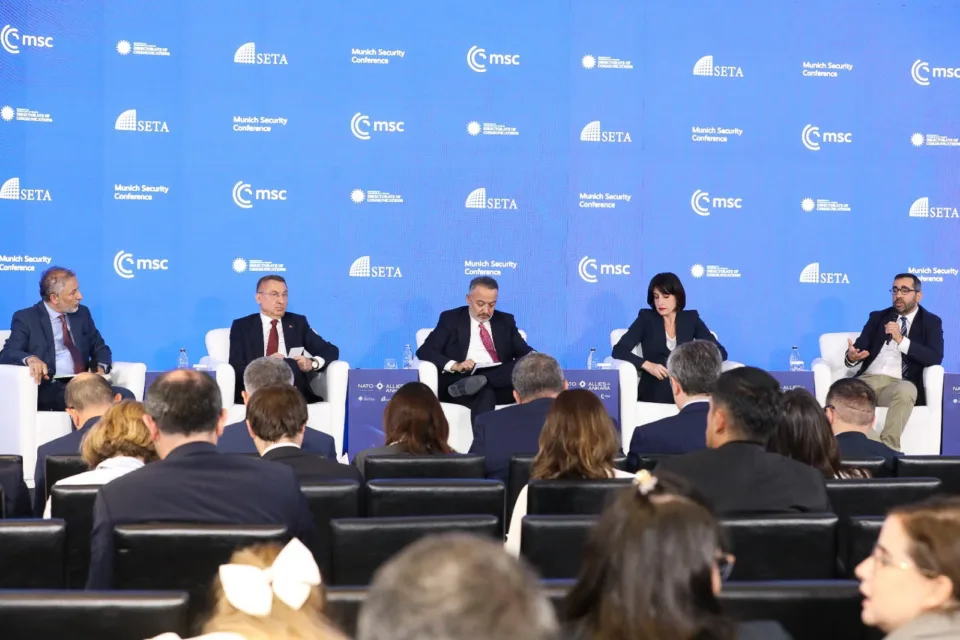
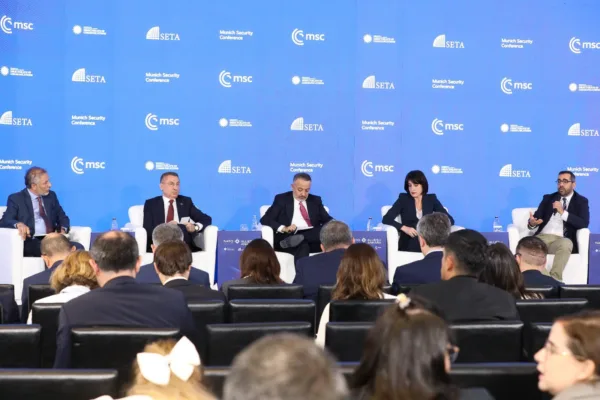
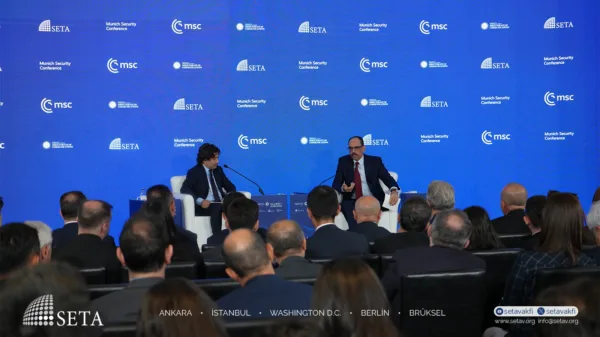
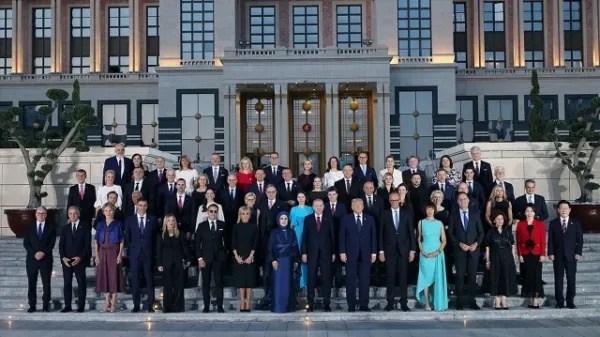
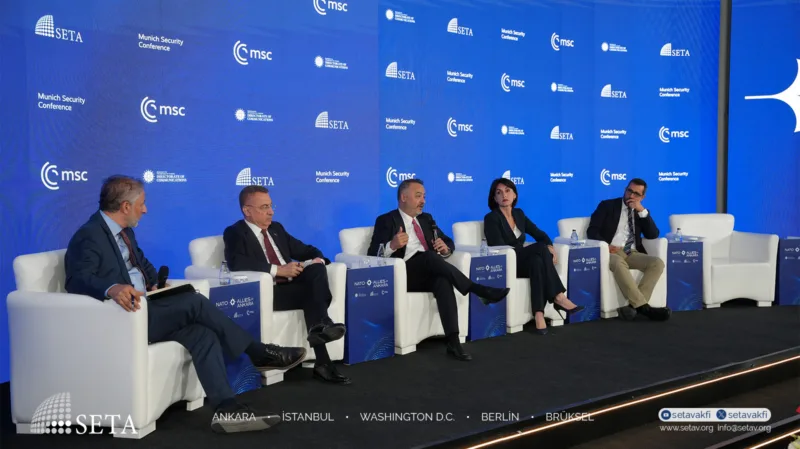
On the sidelines of the 36th NATO Heads of State and Government Summit, the panel “Beyond the Post-Cold War Order: Navigating the Age of Strategic Uncertainty” was held as part of the “Allies in Ankara” program, co-organized by the Directorate of Communications, the Munich Security Conference (MSC) and the Foundation for Political, Economic and Social Research (SETA).
Moderated by our Executive Director Kadir Ustun, the panel brought together Fuat Oktay, Chairman of the Foreign Affairs Committee of the Grand National Assembly of Türkiye (TBMM); Nuh Yılmaz, Türkiye’s Ambassador to Damascus; Maka Botchorishvili, Deputy Prime Minister and Minister of Foreign Affairs of Georgia; and Emile Hokayem, Director of Regional Security at the International Institute for Strategic Studies (IISS).
NATO’s Priorities After the Summit
Opening his remarks, Oktay stated that uncertainty in the current international system affects the entire planet, and that following the Summit, NATO’s primary priority should be to translate its commitments into concrete action and ensure a fairer distribution of the defense burden among Allies. He emphasized that one of Türkiye’s most important accomplishments in this period has been its capacity to transform wars, conflicts and competition into friendship, alliance and collaboration. Noting the recent decline in trust in international institutions, Oktay underlined that Türkiye had anticipated these changes and significantly reduced its dependence on foreign defense industries, thereby becoming a central and agenda-setting actor within NATO. Pointing to unmanned aerial vehicles (UAVs) as an example of how artificial intelligence and technological transformation have reshaped the perception of security, he added that Ankara had recognized this shift early and prepared accordingly.
The Future of Syria
Ambassador Yılmaz recalled that terrorism, polarization and sanctions were Syria’s greatest challenges six or seven months ago, underlining that Israel’s policies have also brought instability to the country and exacerbated its problems. Explaining that terrorism is no longer among the primary concerns but remains a threat under current circumstances, he noted that almost all sanctions have now been lifted. Yılmaz pointed out that Syria has become a safer place and, through cooperation with regional countries, has achieved a measure of stability and considerably reduced uncertainty, creating important opportunities for reconstruction.
Georgia, Azerbaijan and Türkiye Cooperation
Botchorishvili said that although Georgia is not a NATO member, the two have maintained a stable relationship for many years, recalling Tbilisi’s contributions to NATO operations such as the one in Afghanistan and stressing that strengthening this partnership is crucial to Georgia’s long-term strategic objectives. Noting that her country’s geographical location presents unique challenges and opportunities, she shared that preserving peace and stability is the core priority of both foreign and domestic policy, and that Georgia does not believe conflict resolution can be achieved through military means. Underlining that the strategic importance of the South Caucasus is increasing by the day, she said: “The regional cooperation between Georgia, Azerbaijan and Türkiye is a highly successful example. The strong strategic partnership we have developed over decades also holds a distinct meaning in terms of security today.” She added that successful energy and transport projects are not merely economic ventures but have become initiatives that contribute to regional security.
A Transatlantic Community Under Strain
Hokayem pointed to the impact of the Israel-Iran war and US involvement on the international system, saying the conflict has torn the region apart. He noted that the Transatlantic community now recognizes that its past initiatives have failed to yield tangible security in practice, adding that the bloc is undergoing an internal struggle.