Event Summary: US-China Relations in the Age of Coronavirus
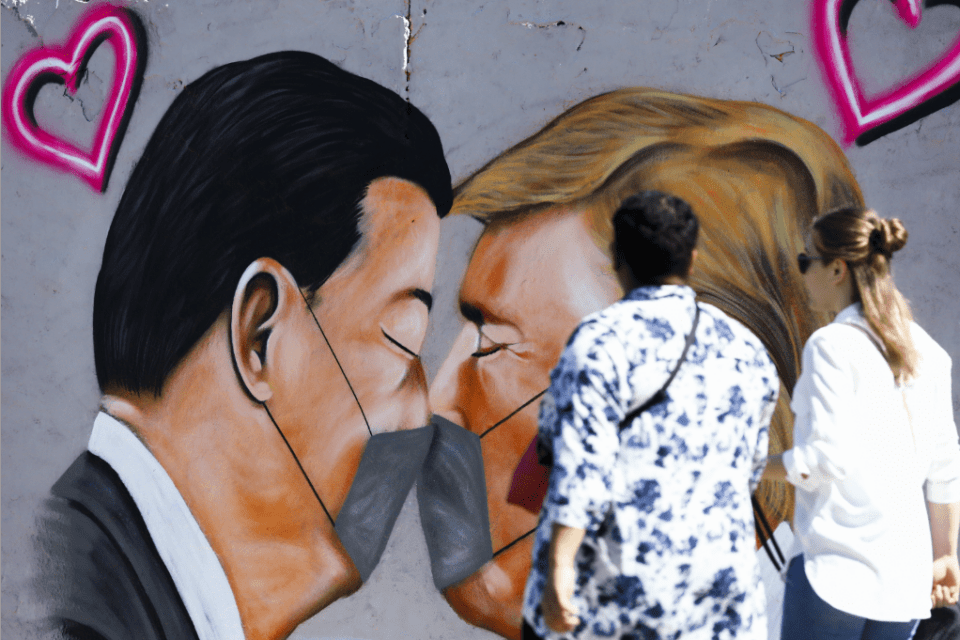
On Monday, May 18, 2020, the SETA Foundation at Washington, DC hosted a virtual panel of experts to discuss ‘US-China Relations in the Age of Coronavirus.’ The discussion featured Matthew Kroenig, Deputy Director of the Scowcroft Center for Strategy and Security at the Atlantic Council, and James Carafano, Vice President of the Kathryn and Shelby Cullom Davis Institute for National Security and Foreign Policy at The Heritage Foundation. The panel was moderated by Kilic Kanat, Research Director at SETA DC.
To begin the discussion, Kroenig explained that the COVID-19 pandemic will not fundamentally transform the international system but rather exacerbate trends seen before the outbreak, like great power competition. The common threat of a global health crisis could have presented an opportunity for the US and China to cooperate, but rather it has manifested itself as a new arena where great power rivalry plays out. He noted that in his new book, The Return of Great Power Rivalry, he argues that democracies are superior to autocracies when handling these types of crises. Kroenig highlighted the fact that early on, many praised the Chinese government’s response to the outbreak and criticized democratic countries for their slow, gridlocked response. Over time, it has been made clear that the Chinese response was deeply flawed for a number of reasons, and Kroenig argues that this may present a moment where US public opinion turns strongly against China. In terms of the effectiveness of international institutions, Kroenig calls for a two-track system going forward. The US must reassert American and allied influence in these organizations but leave room to create new institutions with like-minded partners. There must be a middle ground between clinging onto a dated system and tossing the existing system out altogether. He encourages the administration to make it clear to China, particularly in places like the South China Sea and Taiwan, that it cannot take advantage of the current situation at the expense of US interests.
Carafano magnified the fact that the world has officially entered the era of great power competition, the most transformative period since the end of the Cold War. But, the pandemic will not fundamentally change the international system; the world will likely pick up where it left off in the aftermath of this crisis. Carafano believes that much of the future competition between the US and China will be shaped by who recovers first, fastest, and best. He urges people to watch their economies closely over the next year because getting companies up and running to avoid a deep economic recession is above all else. Moving forward, Carafano insists that the Trump administration will engage more with international institutions because they have turned into a battleground for great power competition with China. Beijing is using international organizations not to create norms but to remove obstacles to its own power. As hard as the Trump administration has been on China, it will have no choice but to push back. In terms of policy toward China, he urges the administration to punish China while helping the economy recover. The key to this strategy is ensuring that the punishment of China does not interfere with US or allied economic recovery. He wants to see the US take action to get China’s attention, not necessarily only to feel good.