Gradualism and Islamist Experience in Tunisia and Egypt
For moderate Islamists, who refute violence as a political strategy and agree to participate in formal politics, the concept of gradualism (tadarruj) has become a widely utilized term. Operating within a repressive and hostile political environment, Islamist groups embraced the gradualist method so as to safeguard their political and organizational survival. Defined as a reformist method of “the gradual transformation of individual behavior, state and society in line with Islam,” gradualism differed from the violent, insurrectionary approach to capture political power.
As Islamists did not rush to political power, they espoused a low-profile and avoided confrontational rhetoric. They chose to work within the system, participated in elections, and joined coalitions, even with ideologically divergent groups. Hence, they became acquainted with the ideas of power sharing, coalition building and political accommodation when they held opposition seats.
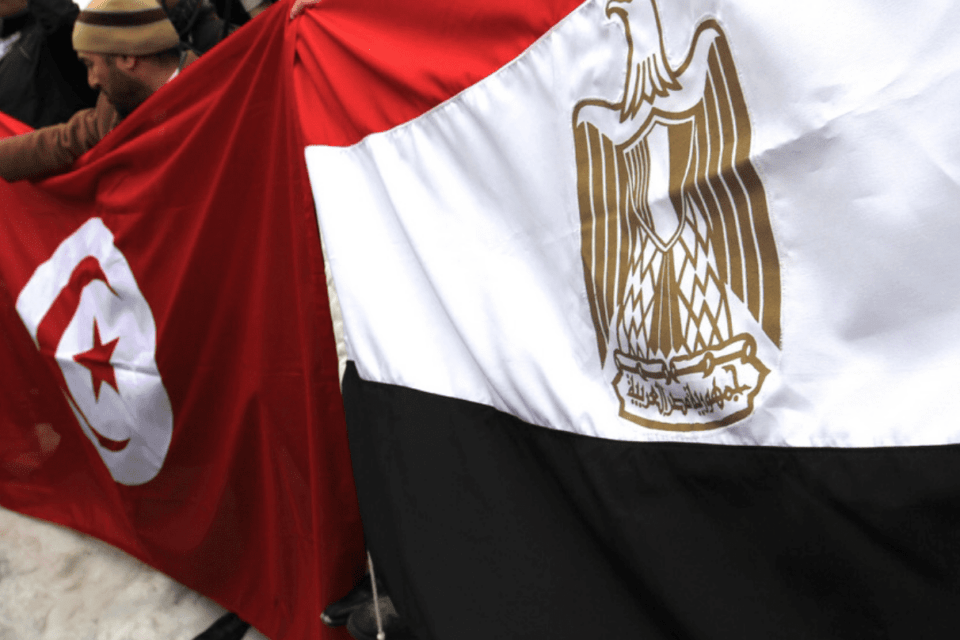
Islamists were catapulted to the top of the political system following the Arab uprisings of 2011. Put differently, long-time outlawed or disadvantaged Islamists found themselves at the epicenter of the political turf. The suddenness of their political ascendancy in actuality contrasted with the essence of gradualism, namely its incrementalist character. Gradualist tactics served the Islamists’ interests when they were pushed to the backseat of politics. What happened to the gradualist approach after they finally captured the driver’s seat in the aftermath of the Arab uprisings? How did the opening of new opportunity spaces affect their gradualism? Was gradualism merely a tactical choice, one that would be renounced as soon as the quest for political power is complete? Or did it become a crucial reference point for more accommodating and conciliatory politics after taking power?
Al-Nahda’s Gradualism: A Success Story?
In an interview given in 1996 to the Turkish newspaper, Yeni Şafak, al-Nahda leader Rashid al-Ghannouchi described the party’s political strategy as being “gradualist.” Having witnessed the bloody results of Algerian Islamists’ rapid inclusionary experience, Ghannouchi opted to assume a more prudent and realistic political strategy. Underlining the necessity of making alliances with secular parties in a transitional period, mainly due to their clout in the media, economy, arts, and the international arena, he stated his willingness to pursue a pluralist political approach. Demonstrating the impossibility of finding solutions to Tunisia’s problems by an ‘Islamists-only’ approach, he urged cooperation with the other parties. “This kind of [power-sharing] is Islamic for us,” he offered… Continue Reading