Allies at Odds: US-Turkey Differences in Northern Syria
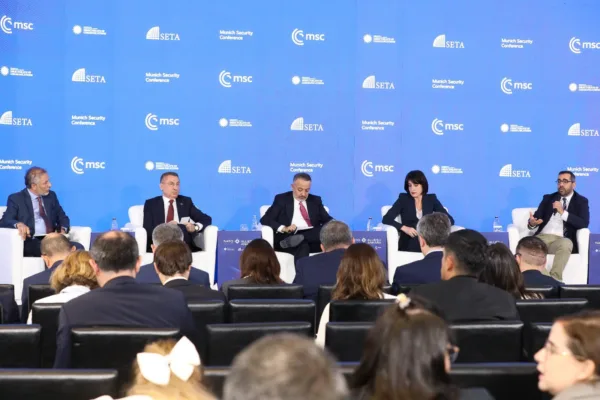
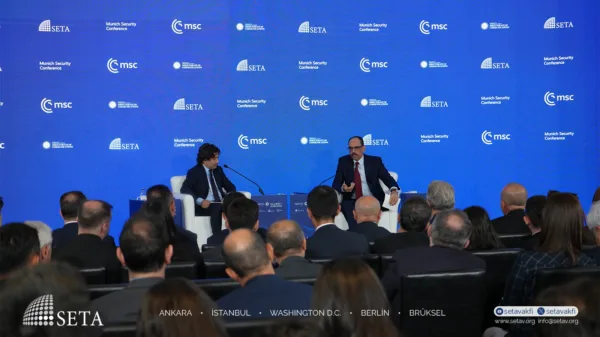
On Thursday, March 1st, the SETA Foundation at Washington DC hosted an event “Allies at Odds: US-Turkey Differences in Northern Syria,” focused on recent developments in northern Syria and their effect on the US-Turkey relationship. Panelists included Richard Outzen, Senior U.S. Army Advisor & Member of Policy Planning Staff at the US Department of State; Denise Natali, Director of the Center for Strategic Research at National Defense University (NDU); and Kilic B. Kanat, the Research Director at the SETA Foundation at Washington DC. Kadir Ustun, the Executive Director of the SETA Foundation at Washington DC, moderated the discussion.
Richard Outzen began the discussion highlighting Tillerson’s January speech on a way forward in Syria. He mentioned that not only was it difficult to develop a policy but it also created some tension between the US and Turkey and also alluded to the challenges of trying to avoid direct confrontation with Russia and Iran. Outzen argued that the US has a more coherent policy now, but that there are areas in which Turkey and the US have to cooperate in order to successfully move forward in Syria. Outzen claimed that the US and Turkey are working hard in order to reach a positive outcome in Syria, suggesting that bilateral discussions will occur in order to fix disagreements, or at the very least acknowledge and find a working balance. Optimistically, Outzen argued that the Syrian policy the US has laid out can work. He also noted that the policy laid out will require tremendous efforts with mutually acceptable definitions and paths between the US and Turkey to move forward. Outzen ended his comments by claiming the US and Turkey cannot solve Syria’s problems alone, however having a way forward outlines will allow for issues to be resolved.
Denise Natali focused her remarks on the importance of the US-Turkish relations, stressing that the US cannot move forward in Syria or the region without a strategic plan with Turkey. Regarding the Kurds, Natali stressed the importance of evaluating the differences of the Kurds, contending that it is incorrect to assume all Kurds have the same goal and want to be associated with the YPG. She believed that politics should move away from generalizing the Kurds and instead focus on territorial units, not ethnic or sectarian units. Natali argued that it will be critical for the US to assist in brokering deals with the different groups of people in Syria and the government, which is a large concern for Turkey. She felt that it is important to treat each region as distinct regions, instead of solely Kurds, Arabs, and other ethnic and sectarian groups. The US should assist brokered deals for local populations to maintain their territories. Historically, there have been relations between these various territories and Turkey, therefore the US should work on how to re-establish these relations.
Kilic Kanat asserted that the US and Turkey kept focused on the next big thing for them to work together on, but never thought to re-strategize the relationship between the two, essentially hoping for the best, and failing to prepare for the worst. Moving forward to strengthen the US-Turkish relations, Kilic noted that the bar is set low to rebuild the relationship. He argued that both countries want to work together and recognize that an improvement in their relationship will generate innovation and creativity. Turkey expects the US to take action regarding the YPG, and is not content with empty promises. In addition, the US needs to solve its interagency disputes that have resulted in conflicting rhetoric from different officials that Turkey sees as excuses. Lastly, there needs to be clarification of the US strategy in Syria. Better communication between the US and Turkey over Syria is crucial to prevent misconceptions and unwanted incidents from happening on the ground.
Allies At Odds

You may also like