Trump, caught between hawks and pragmatism in Iran negotiations
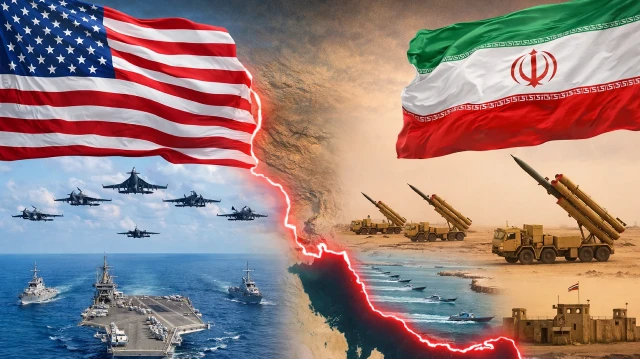
As Trump seeks a way out in negotiations with Iran, his being caught between pressure from domestic and foreign hawks and the political pragmatism required by the November elections continues. The fact that signals of a return to war have been given together with news in recent days that a deal is taking shape stands out as the most concrete example of this. Trump, sending contradictory messages on the same day, indicates on one hand that he is ready for a deal, and on the other that he could return to conflict. When the possibility of a deal strengthens, reactions from Congress, the conservative press, and Israel have been effective in pushing Trump back toward a hawkish line. News as of Monday evening that a memorandum of understanding is being worked on, that the US has carried out ‘self-defense’ strikes in the Strait of Hormuz, and that Israel plans to expand its operations in Lebanon can be read as indicators of how close – and at the same time how far – we are to a deal.
IS TRUMP A HAWK OR A BARGAINING LEADER?
In his first term, Trump first withdrew from Obama’s nuclear deal and then tried to force Iran into a deal by applying a policy of maximum pressure. In North Korea policy as well, he first threw around the threat of ‘fire and fury’, but later met with Kim Jong Un in the demilitarized zone and entered North Korea. After targeting the Taliban for years in Afghanistan, he signed the Doha agreement, concretizing America’s withdrawal process. In the trade war with China, he first applied sanctions and additional tariffs while seeking a trade deal, and also achieved partial compromises. He took an extremely tough stance against NATO members and then touted member countries increasing their defense budgets as his own success.
In all these examples, we see that Trump is not an ideological hawk but rather a bargaining leader who seeks a deal through his own unique method of raising the stakes. Trump first inflates the crisis with extremely high rhetoric and a sense of urgency, then applies maximum pressure, but sees this as part of the bargaining process. In the maximum pressure process, he has also shown that he can resort to military intervention if necessary, not content with just sanctions and economic pressure. It is possible to say that his entry into the Iran war also stemmed from his thinking that this bargaining approach of his would work. Being ‘convinced’ by Israel, the high self-confidence from the Maduro operation, the support of the pro-Israel Congress, the Epstein file, and the desire for political victory were influential on Trump, but his belief that he has the bargaining ability to get what he wants from Iran using both soft and hard power stands out as the most critical psychological factor.
REPUBLICAN HAWKS AND THE NETANYAHU FACTOR
While the majority of the American people and even Trump’s own base do not want war, the maximalist attitudes of foreign policy hawks in Washington exert influence on Trump. Senators like Lindsey Graham and Tom Cotton, along with media outlets like Fox News and the Wall Street Journal, are influential in shaping Republican politics, while Israeli Prime Minister Netanyahu also contributes to the spread of the hawkish position through his influence on Congress and the press. These circles continue to advocate for the complete destruction of Iran’s nuclear capacity, the economic collapse of the regime, and ultimately regime change. Fearing the concessions Trump might make, feeling the need to control oil prices before the November elections, these circles put pressure on the deal by highlighting some unrealistic goals.
The Netanyahu side, for its part, does not shy away from insisting on even more maximalist demands. Israel, putting forward conditions such as the complete destruction of Iran’s uranium enrichment capacity, the termination of its missile program, and the withdrawal of support from its regional proxies, uses language that does not allow Trump to achieve a controlled reduction of tension. It should be remembered that Netanyahu openly opposed Obama’s nuclear deal and convinced Trump to tear it up. Israel, which has done its utmost to directly sabotage negotiation processes, does not hesitate to announce that it will expand its operations to prevent Trump from including Lebanon in a deal with Iran. While Israel tries to sell the Iran issue, in which it is engaged in a struggle for regional superiority, as an existential issue, Trump sees it as a political victory he can sell before the elections.
IS IRAN CORNERED?
The basic assumption of the hawks’ prominent theses is that Iran is cornered and that therefore more pressure will either extract more concessions or topple the regime. However, this thesis asks us to ignore that the Iranian regime, although greatly weakened, has survived despite many crises and existential attacks. The maximum pressure policy in Trump’s first term, the Soleimani assassination, the Mahsa Amini protests, the 12-day war of June 2025, and the current war were not enough to topple the regime. Moreover, despite Iran taking a major military blow, as a result of the Trump administration’s miscalculations, it has come to a position where it has a say over the Strait of Hormuz. The economic and political relations it has developed with Russia and especially China also help the Iranian regime survive and, more importantly, increase its bargaining power.
Looking at this picture, it is not easy to say that Iran is cornered and trying to reach a deal as soon as possible. Nevertheless, it should be noted that Iran’s trump card, the Strait of Hormuz, may face the risk of losing its weight in the medium and long term. However, the inflationary environment created by oil prices will have a direct impact on Trump’s political performance in the November elections. Even if we accept that Iran is relatively cornered, its being in a position to bargain makes the declaration of victory that Trump seeks impossible and also gives the hawks a trump card to veto the deal. Instead of sidelining the hawks by ‘slamming his hand on the table’, Trump insists on trying to give the message that he is the most hawkish and most maximalist actor, thereby limiting his own room for maneuver.
Trump’s internal contradiction stands out as his not wanting to continue the war on one hand, and his wanting to sign a grand deal with Iran – one never achieved before – while continuing to appear hawkish on the other. Thus, a cycle emerges: constant threats, sanctions and economic pressure, military operations, a search for temporary compromise, and then a return to pressure. While the hawks argue that Iran can be fully subdued, Trump prefers a method of controlled tension. Since it seems unlikely that the distance between these two approaches can be closed, Trump seeks other agendas to satisfy the hawkish circles by bringing up the Abraham Accords. Trump’s Iran strategy can produce neither full war nor genuine peace. Trump, oscillating constantly between escalation and restraint, postpones the negotiation process in search of success, but it seems more likely that this kind of crisis management will perpetuate the problem rather than produce results.