Black sea grain corridor and China’s interest in Türkiye
Russia’s suspension of the Black Sea grain deal continues to capture the global media’s attention as that decision disproportionately hurts African nations. Having hosted 17 African heads of state and government last week, the Kremlin used the discourse of “opposing new Western colonialism together” at the Russia-Africa Summit – where Russian President Vladimir Putin pledged free grains to Africa.
Partly isolated since the imposition of Western sanctions over the Ukraine war, Russia has been interested in Africa for a long time. It is no secret that the country has been sending weapons and mercenaries (read: the Wagner Group) to some regimes. At this time, Moscow attempts to create an alternative grain corridor to pose an ideological challenge to the West.
Meanwhile, Ukraine seeks to transport its grain via the Danube River as Kyiv has also been trying to counter the threat of Russian attacks against grain-loaded vessels with the help of Black Sea countries. And governments around the world expect Türkiye and China to talk Russia into reinstating the grain deal – which Ankara has been trying to achieve by presenting a scheme that will meet Russian expectations to Moscow.
China’s growing interest
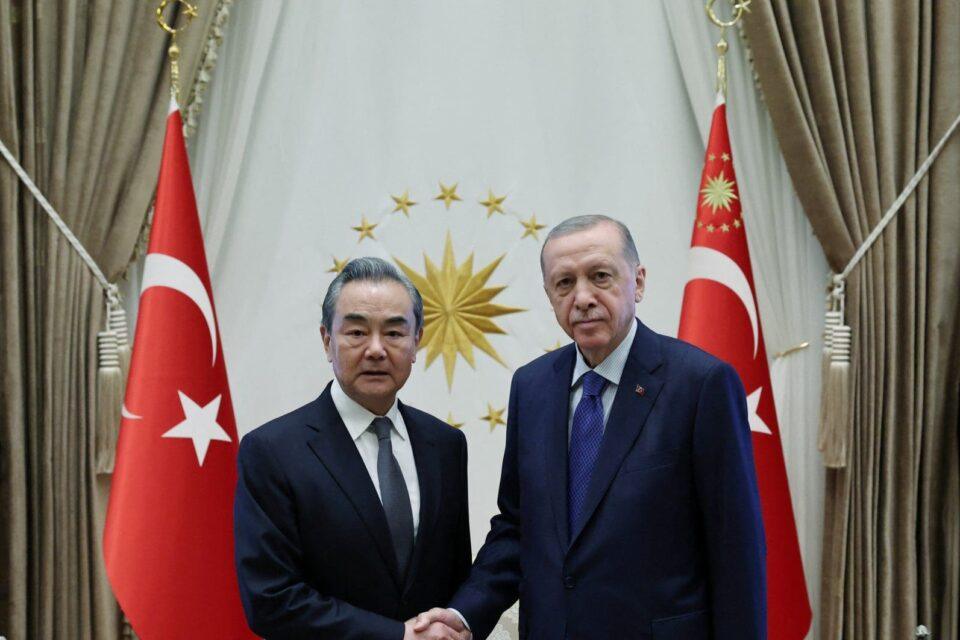
It is important to add that the new Chinese Foreign Minister Wang Yi visited Türkiye the day after his appointment to discuss bilateral trade and the Middle Corridor as well as Ukraine and the grain corridor. Having prepared a 12-point proposal, including a cease-fire, regarding the Russia-Ukraine war, Beijing has been making headlines with its recent diplomatic initiatives. The country recently brokered normalization between Iran and Saudi Arabia, notably paying attention to Israel and Palestine. It was also noteworthy that the Chinese foreign minister visited Türkiye right after the country signed off on Sweden’s NATO membership at the Vilnius Summit. As Türkiye rekindles its relations with NATO and the European Union, it naturally attracts attention from China and Russia.
I posit that anyone predicting a downturn in Türkiye-Russia relations after the Vilnius Summit failed to account for the dynamic geopolitical equilibrium and Türkiye’s increasingly important role in world affairs.
Another important point is that China hasn’t been able to implement the Belt and Road Initiative (BRI) as planned since the United States hurt the Chinese commercial presence in Greece, Israel and elsewhere. Furthermore, the U.S. seeks to contain China through initiatives like AUKUS and QUAD, as well as defense partnerships with South Korea, Japan and the Philippines. With India’s growth rate exceeding China, the country increasingly needs to protect its investments and commercial initiatives in Central Asia, the Middle East, the Gulf, Africa and South America.
‘Europe cannot ignore Türkiye’
Under those circumstances, middle powers like Türkiye, which demonstrate their strategic autonomy, become all the more valuable. Hence the growing interest among global powers and countries in the region to work with Türkiye. That is why the Turkish minister of Treasury and Finance, Mehmet Şimşek, said the following at the Salzburg Summit: “If Europe wants to become a better player in global affairs, it cannot ignore a country as sizable as Türkiye. I believe that Türkiye can help Europe become a greater center of economic power.”
Attempting to play a more influential role in the global supply chain, Türkiye develops a new approach with an eye on cooperation and winning together in the Balkans, the Caucasus, Central Asia, the Gulf and Africa. The defense sector came to play a strategic role in that sense.
Speaking at the 16th International Defense Industry Fair (IDEF) closing ceremony on Friday, President Recep Tayyip Erdoğan summarized Türkiye’s approach to cooperation as follows: “Our country’s success story in a challenging field like defense inspires countries worldwide. That is why some countries, which control the power of weaponry, are unhappy. Selling products to our counterparts is not our sole purpose. We intend to build partnerships for the medium and long term. We call for stronger cooperation based on mutual interests and a shared vision.”