Iran Sanctions and Regional Implications
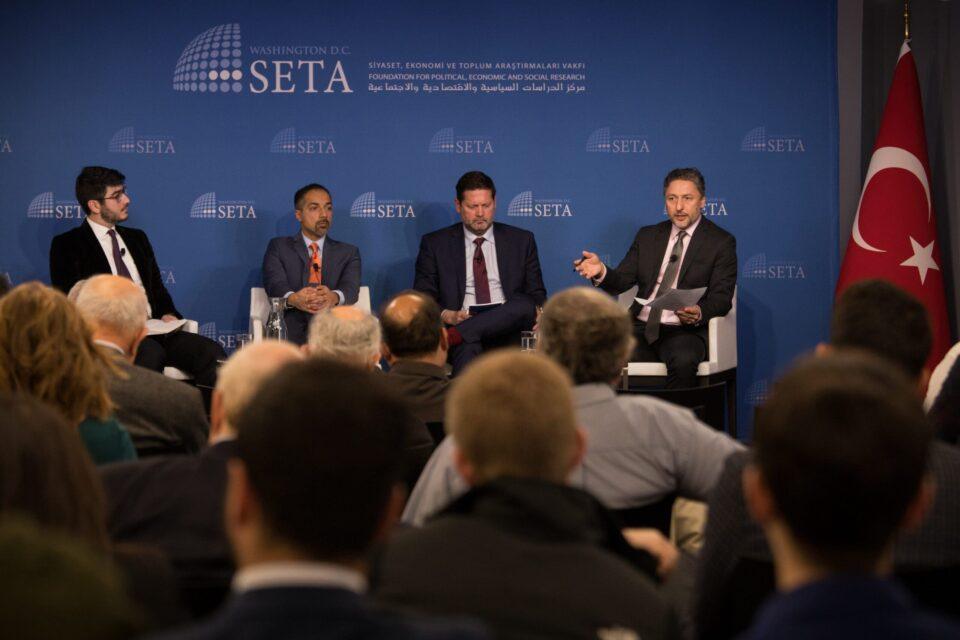
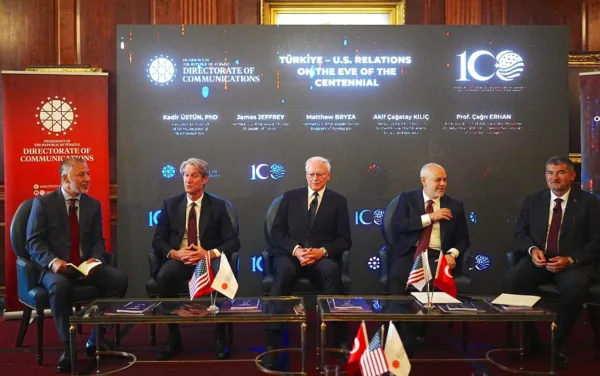
On November 29, the SETA Foundation at Washington D.C. hosted the event, “Iran Sanctions and Regional implications.” The panelists discussed the recently re-imposed Iran sanctions, the granted waivers, and what it means for the future of the Middle East. The panelists were Trita Parsi, Founder of the National Iranian American Council; Michael Pregent, Senior Fellow at the Hudson Institute; and Kadir Ustun, Executive Director at the SETA Foundation at Washington D.C. Hasan Yucel, Visiting Research Fellow at the SETA Foundation at Washington D.C., moderated the event.
Trita Parsi opened the discussion, commenting that there has been a massive shift in the current situation in Iran compared to the predictions six months ago with respect to the sanctions. He added that the initial thoughts were that the sanctions would crippled Iran’s economy, however, after the second reimposition of the sanctions on November 5, the economy did not collapse, in part due to the waivers the U.S. granted eight countries. He opined that in the coming months the U.S. policy will likely fail, questioning what the U.S., China, and Europe will do once the policy fails. Parsi also commented briefly on the U.S.-Saudi Arabia relationship. He noted that the relations have not weakened solely with Khashoggi’s death. Further, he discussed the relationship in terms of U.S. policy decisions, arguing that “if MBS remains in power, U.S.-Saudi relations are going to become a partisan issue going forward”.
Michael Pregent discussed the areas in which Iran appears to be winning its long-term strategy over the U.S., including in Syria, exporting its oil, and with respect to the MBS issues in Saudi Arabia. He asserted that “the regime is still in crisis, but has been given a lifeline. It can survive two years if these waivers stay in place.” He added that the U.S. cannot hurt the Iranian regime if it is allowed to export 1.6 million barrels a day. Commenting on U.S.-Saudi relations, he opined that MBS will likely stay in power. Furthermore, he did not think that relations will break, as Saudi Arabia is a key partner in countering Iran, ISIS, and Al-Qaeda. He suggested that Saudi Arabia should release dissidents and allow them to hold a press conference to criticize MBS without repercussions to help with damage control for the kingdom. Additionally, Pregent stated that one of the greatest problems with Saudi Arabia’s foreign policy is lack of a clear policy goal. He opined that Iran cannot survive six years of President Trump, but MBS would be able to survive six years.
Kadir Ustun provided a Turkish perspective, noting that Turkey is dependent on Iranian natural gas, however is opposed to Iran’s regional expansion. He stated that “on the one hand you find Turkey opposed to sanctions in Iran because they end up hurting the Iranian society more than the regime, but at the same time they are opposed to the regional policies of Iran.” He explained that U.S. policymakers are trying to convince Turkey to align with them, however, he noted various challenges to these efforts. Ustun contended that when a policy is implemented for the sake of sanctions, it is harder to find partners and supporters to strongly impose those sanctions. He opined that the U.S. policy toward Iran with sanctions will not succeed. He added that as the U.S. pushes Iran more, it causes more tensions in the region. Furthermore, Ustun predicted that Saudi Arabia is heading towards a time during which it will struggle. He added that MBS will likely continue to act in a destabilizing manner.
Iran Sanctions And Regional Implications

You may also like