What changed after Trump’s visit to Asia?
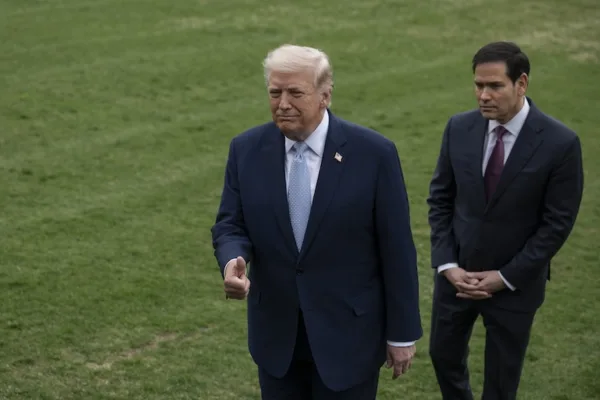
It was interesting to visit the countries in Asia and engage in dialogue with policy makers, observers and journalists on security concerns and global challenges following U.S. President Donald Trump’s visit to the region. The U.S. is considered the most consequential external actor for the security of countries such as South Korea and Japan. Both countries have a series of problems that they need to deal with between each other, such as the debates about the islands between the two countries and historical problems, but they also share similar security concerns pertaining to a nuclear North Korea. Since the beginning of the Trump administration, the region is closely watching what the U.S. role in the region will be. The contradictory statements and confusion in the region were mentioned in this column multiple times. It looks like there is some calm after Trump’s visit, but low-intensity skepticism about the U.S. role in the region continues.
It looks like there is some calm after Trump’s visit to Asia, but low-intensity skepticism about the U.S. role in the region continues.
The calm comes from the speeches that Trump delivered in these countries. In one whole year since the election took place there was confusion in these countries. They were trying to guess the direction of U.S. foreign policy from a range of sources, including the president’s tweets, campaign promises and steps that he has taken since becoming president. His speeches, in some sense, clarified his position for the concerned and attentive public of these two countries. Most people are assured by the remarks that the U.S. will act if North Korea continues its aggressive behavior in the region. For instance, in his speech in Seoul, Trump said: “History is filled with discarded regimes that have foolishly tested America’s resolve. … Anyone who doubts the strength or determination of the United States should look to our past and you will doubt it no longer. We will not permit America or our allies to be blackmailed or attacked.” Multiple people referred to this statement as Trump’s assurance to the security of their countries. More importantly, it was important for many in Seoul that Trump also urged the regime in Pyongyang to negotiate despite his earlier rejection of any kind of negotiations. This was welcomed by the South Koreans, who recently had significant levels of economic tension due to the escalation of the crisis. Even though not all of the questions they had in regard to U.S. policy on North Korea were answered at this position by the U.S. administration, the statements and the trip was a positive step forward.Despite this relief in terms of security, there are some other issues that the countries in the region still have questions about. It is obvious that the attempt of Trump to disengage himself from some of the global initiatives, such as Paris climate accords, generated a significant degree of disappointment among many people. In addition to this, Trump’s position in regard to multilateral trade and concerns about the future of the international liberal order are important issues for both South Korea and Japan. Following this visit, now both in South Korea and Japan, there is an eagerness to keep the communication with the White House at the highest level in order to understand the U.S. position and priorities and get prepared for any kind of policy changes in the U.S.
In the meantime, of course, important homework for both Japan and South Korea is to manage a kind of trilateral relation with the U.S. and China. Especially in the case of South Korea, this issue is more important. Due to the crisis in regard to the deployment of the Terminal High Altitude Area Defense (THAAD) missiles in South Korea, Seoul and Beijing got into a significant degree of tension, which cost the economy in South Korea dearly. Considering the economic punitive mechanisms that China can adopt, it is important for South Korea to keep the balance between China and the U.S. For Japan, the situation seems more straightforward, but it is at the same time more difficult. In the midst of lingering disputes between China and Japan, the Japanese government will try to make sure that the U.S. continues to recognize its treaty obligations if there is a need for it.
This article was first published by Daily Sabah on November 24, 2017.