Iran Sanctions Promise More Trouble for Turkey-US Relations
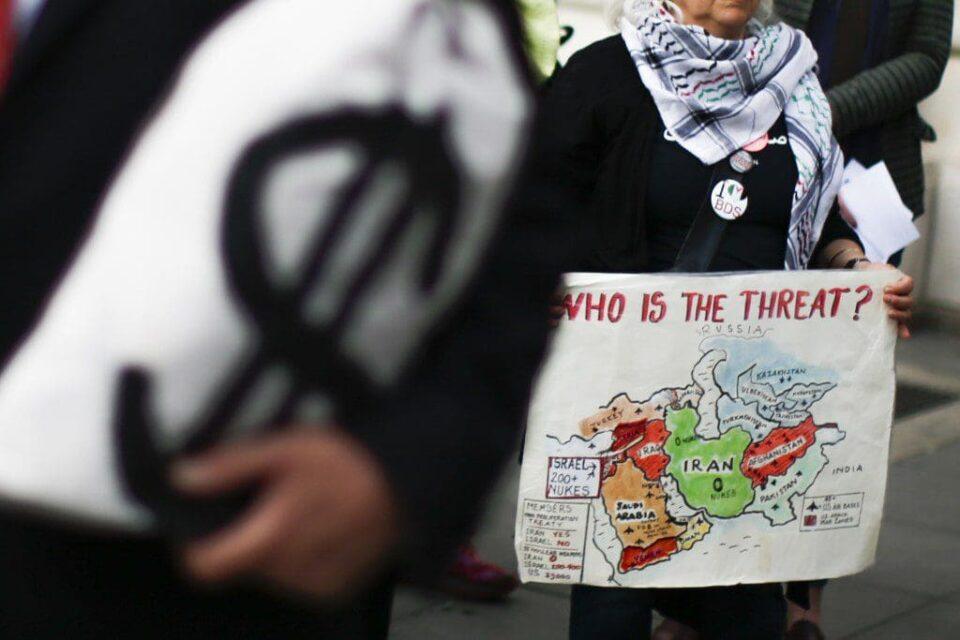
The U.S. withdrawal of the Iran nuclear deal and the fresh round of sanctions imposed on Monday present a test to U.S. allies including Europe and Turkey. President Trump campaigned on getting rid of the “worst deal” ever, pulled out of the agreement, imposed sanctions on Iran and promised to isolate the country despite warnings by European allies as well as Turkey. Although President Trump made a rhetorical gesture to Iran’s President Rouhani about meeting face-to-face without preconditions, the U.S. is set to ratchet up the pressure and seek to isolate Iran ahead of the November elections. If anything is clear, Europe is less than thrilled about having to cooperate with the U.S. and states like Russia, China, and India will most likely continue to do business with Iran. Under these conditions, a renewed U.S.-Iran standoff in the coming months might have serious consequences not only for the region but for U.S. allies as well.
In the absence of a leadership, Europe will likely limit itself to protecting the financial interests of European companies but will not be able to produce a comprehensive deal.
European leaders have already expressed their dismay with the Trump administration’s decision to re-impose sanctions underlining that the deal had been working. Furthermore, they are working on providing legislative cover for those businesses adversely affected by U.S. action. The U.S. leadership has been touting Iran’s growing economic problems as part of the success of their pressure campaign but the Iranian regime survived heavy international pressure before. When it finally came to the negotiating table to make the 2015 deal, there was a broad unity among the P5+1 powers and others. The Trump administration’s unilateralist approach will, in all likelihood, be even less effective in isolating Iran and more punishing against U.S. allies.
The Trump administration says it is open to making a more comprehensive deal but declines to take the lead on forging a framework and doing the diplomatic heavy lifting. In the absence of such leadership, Europe will likely limit itself to protecting the financial interests of European companies but will not be able to produce a comprehensive deal. It is doubtful if it can save the Iran deal in any meaningful way. The element of surprise is a signature feature of the Trump presidency as we have seen the President declare his willingness to work toward no trade barriers with the EU. Yet, on Iran, he will most likely pursue a hardline policy until he can declare some sort of “victory.” This dynamic in the wake of November elections makes it almost certain that we will witness increased pressure on Iran and heightened regional tensions.
The Trump administration’s unprecedented sanctions and additional penalties imposed on Turkish entities for facilitating trade with Iran would deepen the divide, potentially setting the bilateral ties on a course of complete breakdown.
If the U.S. makes good on its promise to actually start penalizing companies doing business with Iran, Europe, as well as Turkey, will find themselves in a difficult position. Turkey relies on Russia and Iran for most of its energy needs and it cannot easily give up on especially Iranian natural gas. The Obama administration provided Turkey with waivers but doing business with Iran continued to be a significant source of tension in the bilateral relationship. It is not clear whether the White House will be willing to provide exemptions to Turkey but President Erdogan already indicated Turkey’s energy needs as his first priority on this issue. The Trump administration’s unprecedented sanctions on a NATO ally have already severely strained the Turkey-U.S. relationship and additional penalties imposed on Turkish entities for facilitating trade with Iran would deepen the divide, potentially setting the bilateral ties on a course of complete breakdown. Let us hope that the most recent talks between the two sides on the Iran sanctions produce tangible results and that they are not reversed by hasty decisions.
Finding a comprehensive solution to the standoff with Iran would remove a significant source of tension from the region but it will probably not be possible in the short and medium terms, barring a major reversal by President Trump or the Iranian regime. In the meantime, both Europe and Turkey will have to figure out a way to work with a unilateralist U.S. administration in order to protect their economic interests as well as energy needs. The already troubled Turkey-U.S. ties, however, will almost certainly experience the most duress as a result.
This article was first published at The New Turkey on August 7, 2018.
You may also like