Turkish-US Relations at Insight Turkey Conference
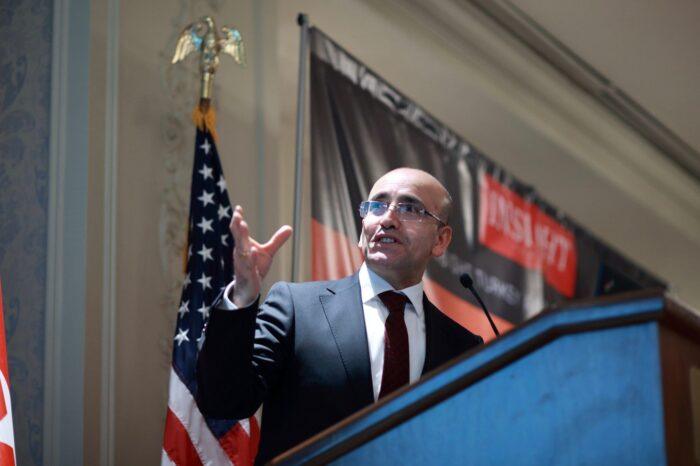
U.S.-Turkey bilateral relations were discussed in detail in various different panels during the 5th Annual Conference of Insight Turkey organized by the country’s think tank SETA foundation in Washington, D.C.
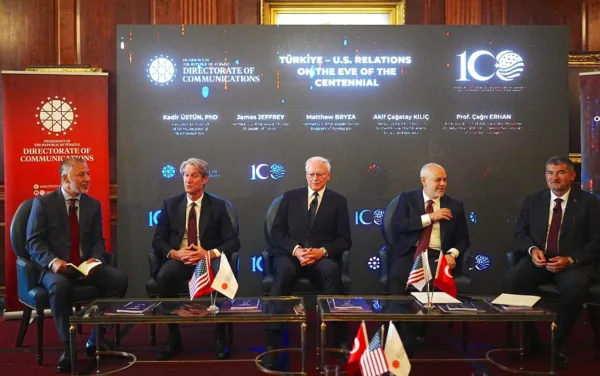
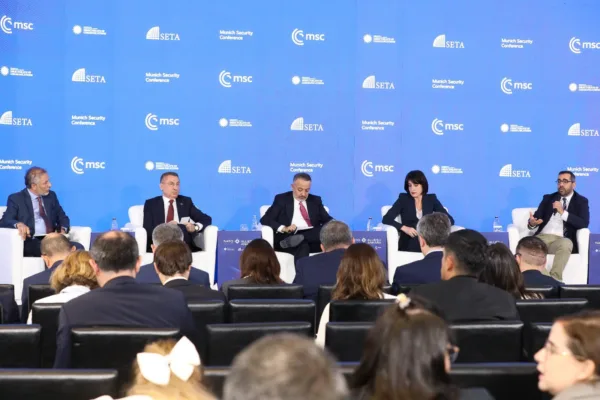
In the first week of 2016, academics and journalists from Turkey and the United States joined together in Washington to discuss topics related to Turkish foreign policy, including Syria, border security, the Kurdish question and Turkish-U.S. relations. Panels discussed various aspects of Turkish foreign policy at the Insight Turkey 5th Annual Conference, organized by the Foundation for Political Economic and Social Research (SETA) in Washington. However, in each and every panel, at least in the question and answer session, U.S.-Turkish relations, the impact of various issues on these very important bilateral relations and the future of ties between the two countries were discussed. Because of this, the last panel, which focused on Turkish-U.S. relations, became an evaluation of all these variables and the state of partnership between the two countries.
There was almost a consensus between the panelists on the significance of Turkish-U.S. relations for the future of the Middle East. In the last few years, conflicts in the region have started to have greater international dimensions. The conflicts in Syria and Iraq became important issues for international security, as the emergence of DAESH and its increasingly international operations made the fight against it a significant dimension for international security. The policies of the Russian government, meanwhile, became increasingly difficult to predict. After the crises in Ukraine, the Russian government surprised many analysts by directly engaging in Syria and sending military units to support the Syrian regime. Recently, tensions between Iran and Saudi Arabia have also added a different dimension to the region’s crises. At this critical juncture, Turkish-U.S. relations have become even more important for regional security and the handling of these regional crises.
In the coming year there are important opportunities and challenges that await this relationship. In the panel on Turkish-U.S. relations, their most significant challenge in the coming year was almost unanimously described as the Syrian Kurdish Peoples’ Protection Units (YPG) and their actions in northern Syria. Especially the YPG’s expansion west of Euphrates River and its close relations with the PKK make the issue very complicated for bilateral relations. With the fluid situation in the region, rapid changes on the ground can impact relations between Turkey and the U.S. Considering the situation in Turkey since the end of the ceasefire by the PKK, the issue is not only related to the Syrian crisis, but also related to Turkish domestic politics. In several different instances, the government said that it has important red lines regarding the actions of the YPG and serious concerns regarding the operational cooperation between YPG and PKK forces. U.S. military assistance to this group may result in serious problems of trust in bilateral relations.
Other important variables that can impact relations between the two countries include issues such as the state of Turkish-Israeli relations and their possible impact on U.S.-Turkish relations. Some panelists said that although rapprochement in Turkish-Israeli relations may not create the same state as those of the 1990s, they expect the restoration of diplomatic ties to bring a more positive tone to relations. In addition, the resumption of the reunification process on the island of Cyprus is expected to result in a positive development for relations between the two countries.
This article was first published in the Daily Sabah on January 11, 2016.
You may also like