US Foreign Policy: Consistency in Inconsistency
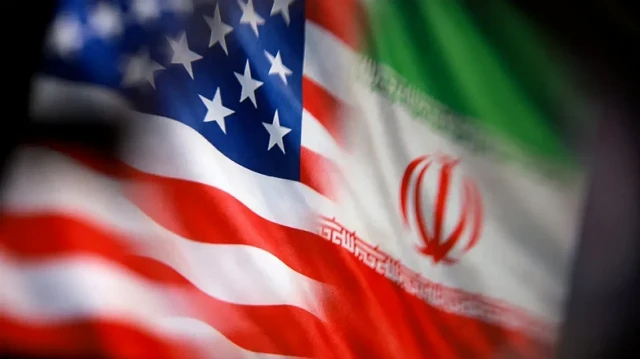
U.S. foreign policy has been the topic of many articles in this column. In the last few years, the absence of a clear, comprehensive and long-term strategy has been the weakest aspect of U.S. foreign policy. Without the guidance of such a strategy, Washington has been experiencing numerous problems, including communication problems with allies due to its unpredictability and increasing militarization due to a policy driven by operations and tactics. Another significant problem that observers very frequently emphasize has been the gap between rhetoric and action. Former U.S. President Barrack Obama’s “red line” was one of the most significant examples of this problem. However, with the changes in the administration so far, there is not much deviation from this issue. In January, then Secretary of State Rex Tillerson made a speech in Stanford University about the U.S.’ new Syria strategy. Although it could not be considered a strategy, Washington’s newly declared goals in Syria were regarded as the new policy by some observers. However, soon after it was understood that it was not even a policy per se. The U.S. Central Command (CENTCOM) commander openly contradicted the stated objectives of the secretary of state, and the White House never seemed to be in the same boat with Tillerson’s statements.Last week, we saw another policy speech, this time on Iran. Newly confirmed Secretary of State Mike Pompeo made a speech on the topic and provided a framework of U.S. policy on Iran. Just like Tillerson’s speech, it had a list of objectives and more importantly, a list of demands for the Iranian side. It could be divided into four parts. The first part of the 12-point list addresses issues pertaining to Iran’s nuclear program, including stopping all uranium enrichment and providing unqualified access to the International Atomic Energy Agency (IAEA). The second targets Iran’s ballistic missiles program. The third was related to Iranian activity in the Middle East. The U.S. demands that Iran stops all its proxies and halt all destabilizing activities of the Iranian government in the region. Finally, Iran was asked to stop all its threatening behavior toward countries in the Middle East and release all U.S. citizens detained in Iran.
The lesson learned by U.S. allies and partners over the last few years is that rhetoric and speeches may not matter very much when it comes to foreign policy.
These conditions are a prerequisite for starting more negotiations with the Iranian government. Once again – just as with Tillerson’s speech – we are not sure of the feasibility of these goals. Many have already said these conditions will be impossible to meet. Thus, some argue that the U.S. is trying to come up with conditions are impossible for Iran to accept. It is important to understand that among all these requests and demands what is really missing is a strategy – how the U.S. plans to achieve these objectives. What will be Washington’s foreign policy road map? There are so many unanswered questions. For instance: What kind of instruments does the U.S. plan to use to curb the influence of Iran in the region? There is also uncertainty as to how the U.S. will conduct diplomatic, economic or military operations against Iran. Is it going to be a unilateral approach or will the U.S. try to bring its allies into the equation as well. It is a well-known fact that the EU and other members of the P5+1 – the U.N. Security Council’s five permanent members, namely China, France, Russia, U.K. and the U.S. plus Germany – are against any kind of withdrawal from this agreement. Also, Pompeo tried to give the impression during his remarks that all options are on the table for the U.S. regarding Iran; but it is not clear what the process will be for choosing an Iran policy. What kind of interagency group will be formed and what kind of options are they going to analyze.
The lesson learned by U.S. allies and partners over the last few years is that rhetoric and speeches may not matter very much when it comes to foreign policy. After Pompeo’s speech, this issue once more tops the agenda. But without answers to the questions above, the world will consider these demands another rhetorical action of the U.S.
This article was first published by the Daily Sabah on May 25, 2018.
You may also like