Is America choosing encirclement over victory in Iran?
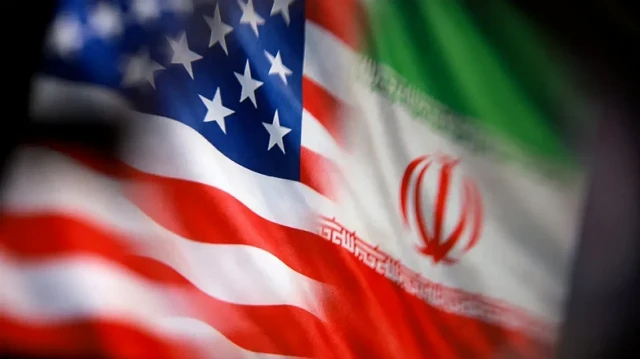
Now that it has become clear that a clear victory cannot be achieved in America’s Iran strategy, it can be said that it is beginning to evolve toward a policy of encirclement and economic pressure. Trump’s announcement of “total economic pressure” points to a new strategy taking shape, involving steps such as blocking Iran’s trade, limiting its oil revenues, continuing the American blockade in the Strait of Hormuz, and avoiding military conflict to escape war costs. The realization that the war will not end with a clear victory or a swift diplomatic deal is causing Washington to increasingly adopt a longer-term “conflict management” policy. The aim of the blockade and heavy sanctions is no longer to force Iran’s surrender, but to ensure Iran’s encirclement in an equation where neither side can declare a clear victory.
THE FATE OF THE NEGOTIATION PROCESS
Trump’s statement that there is no negotiation process between the two countries appears to be a step aimed at reducing the political pressure on the fate of the talks. The easing of political pressure created by the markets’ focus on the negotiation process and calls from Republicans to end the war before the November elections could give Trump more room to maneuver. Washington now has a new approach that shifts from the goals of completely ending Iran’s nuclear program and fully opening the Strait of Hormuz to international trade, toward narrower objectives focused on increasing economic pressure on Iran. Unable to get what he wanted from the negotiation process, Trump wants to break the pressure that this process has placed on him.
Measures such as blockading Iran’s ports, preventing its oil trade, hindering its military reconstruction, protecting oil transit through the Omani route in the Strait of Hormuz, and thus avoiding large-scale new American military operations point to tactical steps of a new strategy. Trump’s ‘Economic D-Day’ announcement is not capable of quickly bringing Iran to its knees. It is clear that its aim is to make it impossible for Iran to access the resources it needs for reconstruction. Even if the blockade process does not persuade Iran to accept a deal full of concessions, it will place a major obstacle in the way of its capacity-building.
THE ENCIRCLEMENT STRATEGY
Washington, which is trying to break the psychological impact of Iran’s limited attacks by not giving a large military response, is beginning to construct an economic encirclement strategy whose effects we will feel more in the medium term. The UAE’s announcement that it will not engage in any trade with Iran can also be evaluated in this context. Although Gulf countries expect deterrence from America to prevent Iran’s attacks, the UAE’s evolution toward a policy of economic pressure indicates that the encirclement strategy may over time become a regional policy. However, many regional countries will need time to adapt to a policy of completely ending trade with Iran, and it is unclear how long Washington will sustain this strategy.
We are entering a period where Iran will try to exert counter-pressure through its regional proxies and by focusing on other American targets. Tehran will not accept being pushed into the role of being unable to establish full control over the Strait of Hormuz and watching its trade routes change. It may try to respond kinetically to the economic pressure and encirclement policy, which could have the effect of further increasing uncertainty in the region. Both sides may inevitably return to an escalation spiral by taking even more aggressive steps to make each other’s positions unsustainable. However, it can be said that on the American side in particular, the effort to achieve quick results has shifted toward a more prolonged encirclement policy.
Although Washington is moving from a policy of quickly bringing Iran to its knees toward a more patient encirclement policy, it is not possible to assume that this will create a stable balance. Preventing Iran from rebuilding its military capacity, driving its economy toward collapse, limiting the cost of the Strait of Hormuz to international trade, and keeping the Gulf on America’s side will stand out as critical “success” parameters of this policy. If Washington fails to achieve these, the policy could turn into a lasting low-intensity and ineffective war mechanism that reduces the possibility of a diplomatic exit and increases the risk of escalation. By choosing this approach, Trump is opting for a form of struggle that spreads the cost over time and distributes it among regional countries, rather than ending a war from which he has not achieved results. In the coming period, the critical question will not be when Iran will surrender or how a deal will be reached, but how effectively Washington can sustain this longer-term encirclement politically, economically, and militarily.
You may also like