Why did America and Iran return to war?
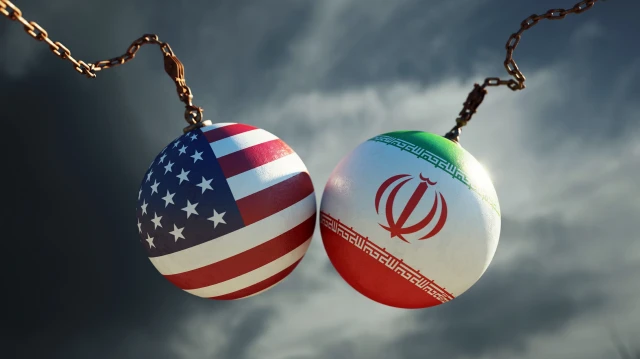
With President Trump’s announcement that the war with Iran had restarted, CENTCOM announced that it had carried out strikes in different parts of Iran for three consecutive days. After Iran struck ships it claimed were violating the agreement, Trump announced that the blockade of the Strait of Hormuz would be reimposed and raised the possibility of imposing a 20 percent fee. Iran, in turn, announced that it had closed the Strait of Hormuz and, in an apparent mockery of Trump, stated that it was reasonable for the force guarding the strait to collect transit fees. The fact that the US and Iran effectively agreed to pause the war without reaching any agreement on fundamental issues signaled that a return to war was possible. The two sides are now negotiating not just issues like the nuclear file or the reopening of the Strait of Hormuz, but the reshaping of the regional balance of power. Both sides seeing themselves in a strong position weakens the likelihood of reaching a comprehensive agreement.
A FRAGILE NEGOTIATION PROCESS
The Islamabad agreement of June envisioned a 60‑day negotiation process, postponing some critical issues and using vague language regarding the fulfillment of certain conditions. Iran leveled accusations that Israel had not complied with the agreement, that the US had resumed its attacks, that the authorization allowing oil sales had been revoked, and that Washington was trying to dictate how Iran’s frozen assets should be used. The US, for its part, raised accusations that Iran had not ensured safe navigation, had attacked commercial shipping, and was attempting to establish a de facto control regime in the Strait of Hormuz. While there was partial justification on both sides, the fundamental problem was that the US and Iran had different intentions in coming to the table. America sat down assuming it had destroyed Iran’s capacity and would extract concessions on many long‑standing issues, while Iran calculated that it had emerged from the war with strategic gains and would therefore reshape the regional balance of power by reorganizing the transit regime in the Strait of Hormuz.
Trump could be considered successful in getting Iran to accept negotiations and reconfirming that it would not acquire a nuclear bomb, but these did not amount to the strategic capitulation Trump wanted. In response, Iran, inferring that resistance had forced America to the table, preferred to view the promise of sanctions relief and the negotiations themselves as signs of weakness. These differing intentions and orientations created a dynamic that made the negotiation process fragile from the start, and the process ultimately collapsed for this fundamental reason. It is certainly possible to return to negotiations and stop the war again, but how each side evaluates its own position when sitting at the table is critically important. In other words, while it may be possible to end the war, achieving lasting peace without addressing the root causes of the conflict does not seem feasible.
FROM THE NUCLEAR ISSUE TO THE REGIONAL ORDER
Before the war, Iran’s nuclear capacity was at the center of discussions, and America had repeatedly announced that it would not accept this capacity reaching a level capable of producing a bomb. At the forefront of the reasons triggering this war was Israel’s regional power struggle with Iran, but until Trump, America had shaped its pressure around the issue of nuclear disarmament. Trump, emboldened after the Venezuela operation, took a much more daring stance, aiming to destroy both Iran’s nuclear and ballistic missile capacity and, if possible, hoping to achieve regime change, which upended the balance. Trump had thought, as in the Qasem Soleimani operation in his first term, that Iran would not be able to give a serious response and would not close the Strait of Hormuz. When his calculations did not match reality, Trump found himself in a war from which a quick result was impossible.
One of the most critical consequences of the war was that Iran struck America’s regional allies and created an oil crisis in the global economy by closing the Strait of Hormuz. Iran, having shown that it could also inflict significant damage on Israel, managed to force Washington to seek a ceasefire, but it paid a heavy price for this and imposed severe costs on regional countries. While the Trump administration sought negotiations to reduce pressure from both the region and the oil crisis, Iran perceived the regime’s survival and its control over the Strait of Hormuz as victory. Although these dynamics, which prompted regional countries to start developing alternative energy routes, brought both sides to the negotiating table, the agenda is no longer solely the nuclear issue; the question of a new Strait of Hormuz regime and how the regional balance of power will be established have also become fundamental issues.
BETWEEN NEGOTIATION AND WAR
The main reason for the collapse of the negotiation process was not whether diplomacy had succeeded, but rather that Washington and Tehran drew different conclusions from the war. Both sides assumed that military conflict had strengthened their positions, and at the point where negotiations stalled, returning to conflict emerged as the most logical path. The preference to return to conflict, which indicates both sides’ efforts to strengthen their hands, creates an effect that deepens uncertainty further, but we will have to get used to these fluctuations. No one realistically expected that issues unresolved for many years could be settled in a 60‑day negotiation process.
It is highly likely that this round of conflict will also lead to a new negotiation process, but achieving lasting peace can only be possible through a “grand bargain” on how the regional balance of power will be shaped. Even if Trump wants such a deal, Israel will do everything in its power to block an agreement that does not reduce Iran’s nuclear, ballistic, and regional capacity to a minimum. For this reason, in the coming period, conflict and negotiation will continue to be used not as alternatives to each other, but as different tools of the same bargaining process. It does not seem easy to break this cycle until one of the parties becomes convinced that war has not strengthened its position.
You may also like