Can Joe Biden convince allies US now reliable?
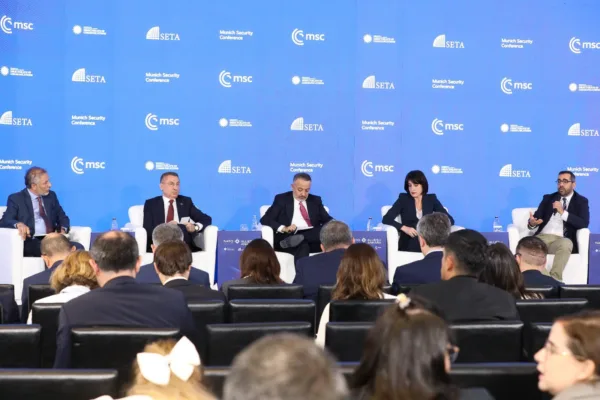
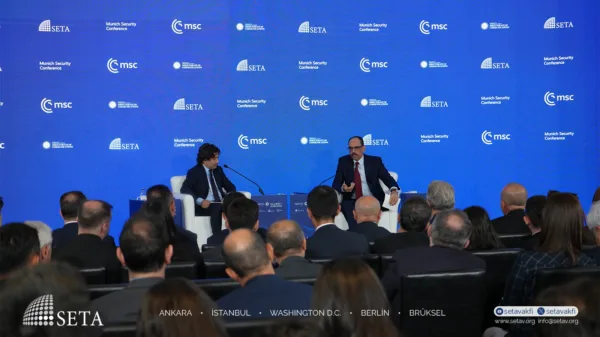
U.S. President Joe Biden and his administration are making every effort to send a message to the world that “America is back.” Biden’s motto was very clear in his recent address to the Munich Security Conference during which he reiterated in the recently released Interim National Security Strategic Guidance.
In fact, unlike previous several administrations, Biden is trying to make his mark on foreign policy from very early on.
The Biden administration is trying its best to negate the assumption that the U.S. will not give priority to foreign policy but will focus on domestic policies due to problems such as the pandemic, the economic crisis, racial injustice and rising far-right groups.
In his confirmation hearings, U.S. Secretary of State Anthony Blinken said the U.S. will pay equal attention to domestic and international developments. Through the interim strategic guidance, Biden has confirmed this attitude.
Guidance insight
The content of the strategic guidance is not much different than earlier statements by Biden’s foreign policy team.
It aims to reassure allies that the U.S. will be back and play the global leadership role, in accordance with Biden’s style.
In this new U.S. foreign policy, the Biden team is trying to prioritize the issues that will necessitate cooperation and coordination among U.S. allies.
The document mentioned several issues including fighting against COVID-19, climate change and establishing effective technology cooperation as the key areas the U.S. seeks to work on with allies.
In multiple instances, the report underlines that the U.S. will not be able to deal with these global challenges alone.
So, then who are these allies? The report did not enumerate all of the allies but mentioned countries in the Asia-Pacific region, including Japan, South Korea and Australia as well as international organizations such as NATO and the European Union.
According to the report, in order to achieve efficient cooperation among U.S. allies, the first step should be revitalizing the democracies, which is mentioned as the biggest advantage of these countries in this increasingly complex international sphere.
In other words, the common denominator will be “democracy,” and such goals can be achieved with the cooperation of democracies.
Seemingly, according to the Biden administration, cooperation in areas such as the environment, the pandemic and technology will lead allies to work on global challenges facing the U.S. such as tension with Russia and China.
What is missing?
However, there are some uncertainties in this plan. First of all, in order for this to be more than just wishful thinking, the U.S. administration needs to come up with plans to build long-term confidence with allies in Europe and Asia.
Yes, the U.S. now may be back and the administration may have a plan; however, it has been a while since the U.S. has been missing and the previous administrations were extremely indecisive.
In this period, a lot of U.S. allies tried to find alternative paths in order to ascertain their security in different unstable regions.
Secondly, it is true that the world will need international cooperation to tackle global problems.
However, there is a major question mark in regard to the position of the different U.S. allies on Russia and China.
The Munich Security Conference demonstrated these differences very openly. Despite the goodwill and trans-Atlantic spirit, there were major differences when it comes to significant policy issues.
Thus, in the next few months, we will see if the U.S. allies in different parts of the world are ready to respond to the U.S. calls in regard to cooperation and coordination.
If they decide to do so, we will soon see the extent of their cooperation.
This article was first published by Daily Sabah on March 6, 2021.
You may also like