New chapter in Turkish-Gulf ties beyond normalization
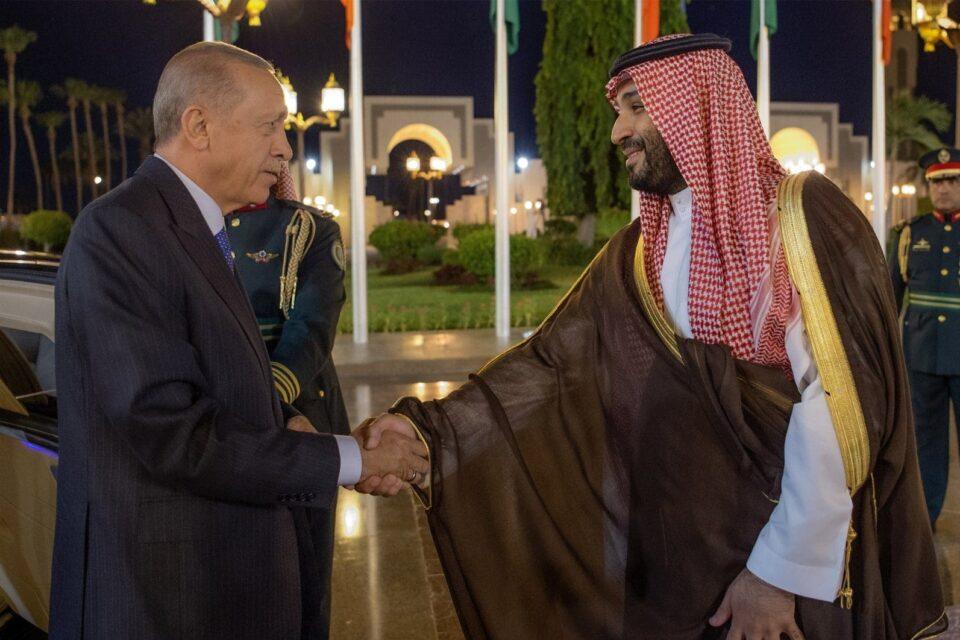
President Recep Tayyip Erdoğan visited Jeddah, Saudi Arabia, on Monday as part of his tour of the Gulf states. Over the course of four days, he will visit Saudi Arabia, Qatar, the United Arab Emirates (UAE) and the Turkish Republic of Northern Cyprus (TRNC) with a focus on investments and commercial relations. However, it is possible to argue that Erdoğan’s trip goes beyond strictly economic relations and marks the beginning of a new chapter in Türkiye’s relations with the Gulf.
Having turned Sweden’s NATO membership bid into an opportunity to rekindle Türkiye’s relations with the West at last week’s Vilnius summit, the Turkish leader ventured beyond normalization with the Gulf states. His administration, which ended tensions with Saudi Arabia and the UAE over the last two years, currently promotes multidimensional regional cooperation. Appearing before cameras at Istanbul’s Atatürk Airport, Erdoğan described the framework for that initiative as follows: “The ongoing crises in the Muslim world call for close consultations and cooperation with the Gulf.” Furthermore, he linked his plan to strengthen Türkiye’s relations with the Gulf states to “creating a peace, stability and welfare belt” around the country as part of his vision of “consolidating the Türkiye axis” – which was featured in his 2023 election manifesto. That approach goes beyond bilateral trade and promotes a broad range of steps, including mutual investments, defense cooperation, national security and solidarity in the face of regional and global problems.
The obvious question is how the relevant countries set aside tensions to pursue normalization and, subsequently, multidimensional cooperation.
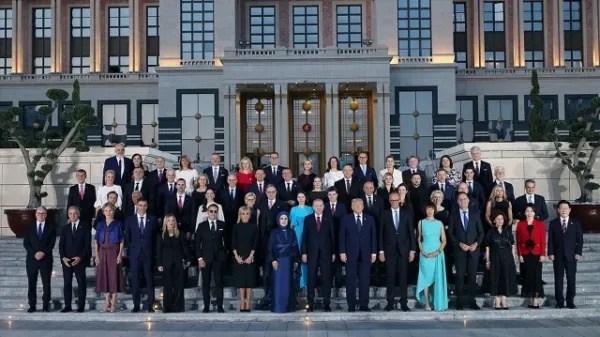
Undoubtedly, Türkiye’s decision to take bold steps in its dealings with the Gulf states reflects the international system’s evolution – which encouraged all relevant parties to pursue normalization. Washington’s partial retreat from the Middle East and the Joe Biden administration’s efforts to reposition the United States in that region encouraged regional powers, which could not defeat each other, to normalize their relations.
Moreover, the Ukraine war made it easier for countries in the region to pursue autonomy in foreign policy by fueling competition between the West and Russia. It goes without saying that Türkiye seized that opportunity most effectively.
Türkiye’s key role in international arena
Erdoğan’s leader-to-leader diplomacy and Türkiye’s pursuit of strategic autonomy in the wake of the July 15, 2016 coup attempt also influenced the country’s current activities. By taking certain steps in Syria, Libya and the Eastern Mediterranean, the Turkish government demonstrated its willingness to risk tensions with the U.S., the European Union and some Gulf states if necessary. At the same time, it proved capable of making independent decisions, stepping out of bloc politics and exercising hard power successfully. Specifically, Türkiye played a key role in breaking the Qatar blockade and Azerbaijan’s victory in Karabakh to highlight the importance of cooperation for other stakeholders and even its rivals. Those developments also served as a reminder to the Gulf states that they could trust Türkiye as a friend and ally. That is how the country was able to promote normalization amid tensions and proceeded to pursue multidimensional cooperation.
That is exactly the point that critics who ask why the Turkish government experienced tensions with the relevant countries, if it was going to repair its relations with them, continue to miss.
It is undoubtedly true that rekindling Türkiye’s relations with the U.S. and the EU at the Vilnius Summit shall contribute to its efforts to take its relations with the Gulf states to the next level. That contribution won’t be limited to investments in a range of sectors, including energy and defense. Over the next five years, Erdoğan intends to take additional steps in Central Asia, the Caucasus, the Gulf and Africa to transform Türkiye into the world’s top contributor to international cooperation, stability and security. Hardly anyone would be surprised if the Gulf states prove more successful than the West at fully appreciating the reality of New Türkiye and seizing the relevant opportunities.
It is important to recall that regional powers appreciated and viewed as an example Erdoğan’s policy of autonomy and active neutrality during the Ukraine war. Naturally, there will be certain challenges to overcome as Turkish diplomats strive to manage the various rivalries between multiple Gulf states and promote a climate of regional cooperation. It is impossible to miss that Foreign Minister Hakan Fidan, the man behind Türkiye’s normalization efforts, began to carry out that task without hesitation.