Sharaa’s Washington visit and Türkiye’s role

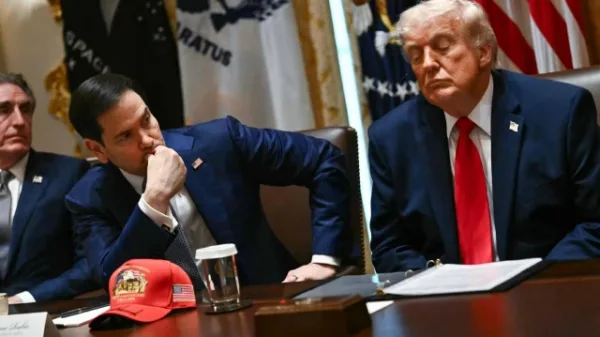
Syrian President Sharaa’s visit to the White House carries great significance not only for his country’s relations with the United States but also for the balance of power in the Middle East. His meeting with Trump in September, during the United Nations General Assembly, had already solidified both his and Syria’s diplomatic and political legitimacy on the international stage. The statements made following the White House talks signaled that Washington was ready to work with him. The participation of Türkiye in these talks also carried the message that Syria’s northern neighbor’s interests would be taken into account in this new era. The lifting of sanctions on Syria, the formalization of coordination with the coalition against ISIS, the reaffirmation of the March agreement on integrating the SDF, and statements regarding a potential security deal with Israel all point to a rapidly opening path for Syria’s reconstruction.
Sanctions and the Reconstruction Process
The lifting of international sanctions against Syria and its leader Sharaa by the UN Security Council, and the suspension of the most recent U.S. sanctions by the Trump administration, mark a major turning point for the country’s reconstruction. The full repeal of American sanctions by Congress represents the next critical stage. Washington’s decision to ease sanctions will create an environment where Gulf countries can finance reconstruction and where Turkish, European, and American firms can operate without fear of punitive measures.
The Trump administration has already either lifted or suspended its own sanctions. It will now need to lobby Congress to remove sanctions such as the Caesar Act completely, though it will likely face renewed resistance under the banner of Israel’s “security concerns.” In an interview with Fox News, Sharaa stated that he would not engage in direct negotiations with Israel, which still occupies the Golan Heights, but left the door open by suggesting that the Trump administration could make progress on the issue. Any potential security deal with Israel — a country that only months ago bombed Damascus and has alternated between provoking and protecting the Druze — would have to demonstrate that the Shaara government is asserting control over the country’s borders. If such a deal is reached, Trump’s hand will be strengthened in pushing for the permanent removal of Congressional sanctions.
Even in areas like Damascus, which were not directly devastated by the war, there is a pressing need for major infrastructure investment, while the reconstruction of completely destroyed regions will take years. Launching this rebuilding process would enhance Sharaa’s political legitimacy by showing that his government can deliver economic stability and public services. As Türkiye has stressed, supporting Damascus is essential for keeping Syria unified. The Trump administration’s pragmatic approach will not only encourage investment but also help contain destabilizing actors like Israel and the SDF. Sharaa’s display of pragmatism and realism has allowed him to rapidly strengthen ties with Washington. Trump’s positive response could, in turn, accelerate Syria’s reconstruction and contribute to broader stability.
Türkiye’s Role
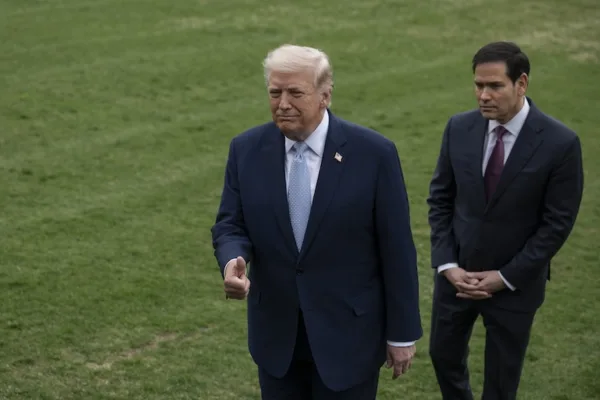
During the White House visit in September, President Trump showered praise on President Erdoğan regarding Syria and regional policy, signaling that he recognizes Türkiye as the country most capable of contributing to Syria’s stability. The participation of Türkiye’s foreign minister in Sharaa’s White House meetings confirmed that the Trump administration views its NATO ally as a key actor both in Syria and across the region. Türkiye will play an indispensable role in Syria’s political stabilization and reconstruction — and Trump knows it. Damascus will also need Ankara’s support in areas such as integrating the SDF and managing relations with Israel. While Trump has signaled openness to strengthening bilateral ties with Syria, he has also made it clear that such progress will only be possible with Türkiye in the equation.
Trump’s willingness to heed Erdoğan’s advice, especially on Syria and other regional matters, was evident during the UN meetings on Palestine and the subsequent ceasefire process. His view that Türkiye has emerged as the biggest winner in Syria, combined with his willingness to criticize Israel’s destabilizing behavior, has helped make the Washington-Ankara channel more productive. In his first term, Trump made several attempts to withdraw from Syria but was constrained by CENTCOM’s ongoing mission against ISIS and by Congressional pressure rooted in Israel’s “security concerns.” Entering his second term, however, Trump finds in Sharaa — now backed by Türkiye — a potential partner for stabilizing Syria. By working with Syria on countering ISIS, reducing Iran’s influence, and advancing normalization with Israel, Trump recognizes Türkiye as his most reliable partner in the region.
Barely a year ago, Sharaa was still on the U.S. terror list. His visit to Washington will go down in history as a symbolic milestone marking Syria’s reentry into the international system after years of isolation. The Trump administration’s suspension of sanctions and its recognition of Syria as a critical player in reshaping regional balances will make it a decisive factor in the postwar reconstruction phase. Just as significant is Washington’s acceptance of Türkiye’s central role as a stabilizing force — a turning point that could define the region’s next chapter.
Yeni Safak / November 11, 2025
You may also like