Soaring oil prices and public backlash put Trump in a tight spot
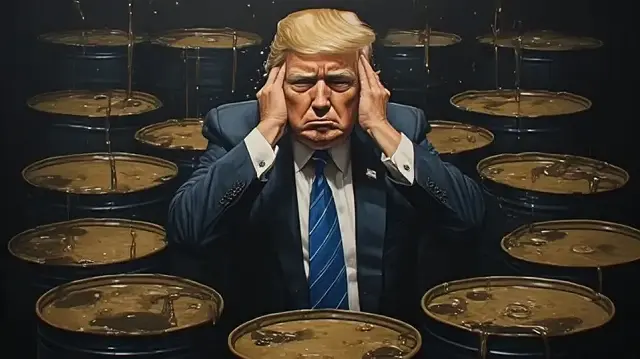
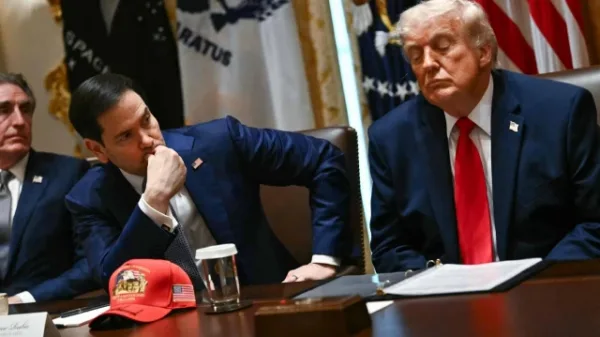
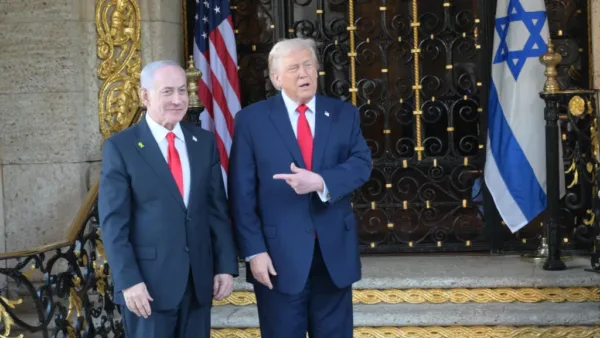
A message posted by President Trump on social media on Wednesday once again revealed just how unsettled he is by high energy prices. Following Israel’s attack on the Pars natural gas field, Iran retaliated by targeting natural gas infrastructure in Qatar. In a move that resembled public diplomatic negotiations with Iran, Trump gave his word that Israel would not target energy infrastructure again. He also vowed a very heavy response should Iran attack Qatar once more.
With oil prices hovering at historic levels, even Trump’s own support base is showing strong signs of backlash. Struggling to find a political exit from the war he entered with Iran’s ‘encouragement,’ Trump is also aware of the domestic political costs generated by the Hormuz crisis. Preferring to keep conflicts limited to military and strategic objectives, Trump now faces mounting pressure from the economic toll. Iran, fully aware of the American public’s sensitivity to petrol prices, is leveraging the threat of destroying regional energy infrastructure to put the squeeze on Washington. Trump’s recent message is a clear indication that this strategy is having an effect.
The Psychological Pressure of Gasoline Prices
In the United States, where private cars are the primary mode of transportation, gasoline prices have a very high visibility in people’s daily lives. The country, which consumes an average of 9 million barrels of oil per day, has around 0.87 vehicles per person—one of the highest rates in the world. Households with two or more cars make up 59% of the American population. Outside of a few densely populated city centers like New York, Americans drive to work, school, the grocery store, or any other activity, meaning they constantly interact with gasoline prices. During daily travel, it’s impossible to miss the fluctuations in petrol prices, advertised in large numbers by gas stations competing with one another. Since the prices of many other goods are less conspicuous, the psychological impact of gasoline prices is immense. This phenomenon, also known as the availability heuristic, leads citizens to gauge the state of the economy and the competence of politicians in managing it through the lens of petrol prices.
Global Prices, National Accountability
Having become perhaps one of the most sensitive indicators in American politics, gasoline prices—despite being tied to the international price per barrel of oil—are increasingly seen by voters as the president’s responsibility. Because fluctuations in oil prices are directly linked to geopolitical crises such as the invasion of Iraq, Russia’s attack on Ukraine, or war with Iran, the public holds the perception that these are problems the president should be able to solve. Just as the oil embargo of the 1970s put pressure on Carter, the Iraq invasion in the 2000s on Bush, and the Ukraine invasion in 2022 on Biden, the war with Iran has now put Trump in a difficult position.
Even though oil prices are set by international markets, the fact that political accountability for gasoline prices is demanded at the national level forces presidents to take action on the issue. Following Bush’s admission that America was ‘addicted to oil’ and needed to break the habit, subsequent investments and the shale gas revolution transformed the U.S. into an energy-independent power and a net exporter. Despite this, America’s deep economic integration into global markets means that fluctuations in oil prices continue to have a significant capacity to shape domestic politics.
When incentives for renewable energy projects aimed at reducing oil dependency, along with efforts to move away from fossil fuels due to environmental concerns, led to short-term increases in gasoline prices, it generated political costs for both the Obama and Biden administrations. Many investments made to comply with the goals of the Paris Climate Agreement were condemned for their role in raising petrol prices. Trump and the Republicans fiercely opposed these initiatives and won elections by promising to lower gasoline prices. The Trump administration not only canceled numerous green projects and removed barriers to fossil fuel use but also promised that operations involving Venezuela and Iran would bring petrol prices down. When these promises failed to materialize, the American public became highly agitated as gasoline prices surged by around 23% in just a few weeks.
The Geopolitical Struggle
It’s fair to say America doesn’t have a serious problem with self-sufficiency in oil supply, as the ability to tap into strategic petroleum reserves and the country’s high domestic production capacity stand out as significant advantages. However, the fact that global prices determine domestic market prices, and that they are decisive for the strategic positions of U.S. adversaries like China and Russia, makes it impossible for Washington to simply claim ‘we are self-sufficient.’ Even if the Hormuz crisis doesn’t directly impact America’s ability to meet its own oil needs, it directly hits the energy exports of Saudi Arabia, Qatar, and the UAE. The continuation of the conflict, which complicates energy purchases for Europe, China, and other Asian countries, also benefits Russia, which gets the chance to sell its oil at higher prices.
In American politics, gasoline prices are not just an economic indicator; they function as a powerful barometer shaping the perception of political leadership. Because fluctuations in global oil prices—directly affected by America’s foreign policy moves—are domestically blamed on the president, Washington is compelled to shape its foreign policy actions according to the sensitivities of the public at home. As seen in the Hormuz crisis, every tension and conflict in the region produces political consequences proportionate to their impact on the wallets of the American people. For this reason, oil prices, influenced by energy supply security and geopolitical rivalry, emerge not just as a geopolitical or geoeconomic issue, but as a critical factor determining the president’s ability to sustain power in domestic politics. It is clear that these political concerns are what drive Trump’s desire to prevent the war from escalating into a conflict where energy infrastructure becomes a primary target.