Urgent need for active US strategy in Syria
President Trump is entering his sixth month in office, and one of the most challenging issue areas that he inherited from the Obama administration is the question of Syria. During his tenure, Obama was constantly criticized for his policies in Syria. In particular, the lack of a strategy to end the conflict in Syria was constantly criticized. His administration considered inaction as the least risky approach in the conflict in Syria. However, inaction brought a lot of unintended and unpredicted developments in the conflict. In five years, the conflict in Syria transformed into a major civil war with significant humanitarian costs and tragedies. The failed state started to export insecurity to the region and has become a major risk for international security. Most probably, people in the Obama administration never imagined the expansion of this conflict, while they were trying to avoid any form of engagement.
In the last couple years after the rise of Daesh in Syria, the U.S. administration started to develop a counterterrorism operation, which started to shape the policy of the administration. President Trump inherited this operation and since then there has been an expectation in the region about a more thorough analysis of the situation in Syria and a strategy about the conflict in the country. So far we have not seen any sign of a comprehensive strategy about this conflict. Thus, for the last six months, the operation against the Daesh terrorist group continued to run the policy of the U.S. administration on Syria. The operation to fight Daesh by supporting the People’s Protection Units (YPG) already had significant problems that were mentioned in this column numerous times. However, developments in eastern Syria last week demonstrated that there could be other problems as a result of the operation-driven strategy.
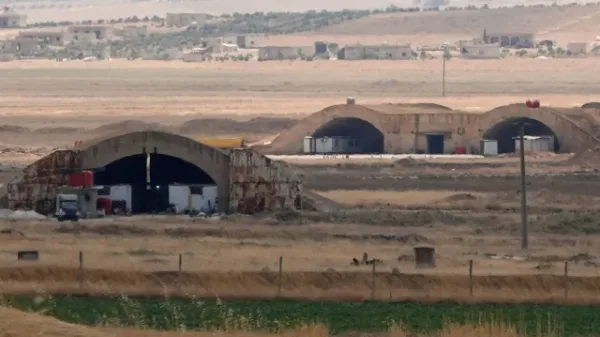
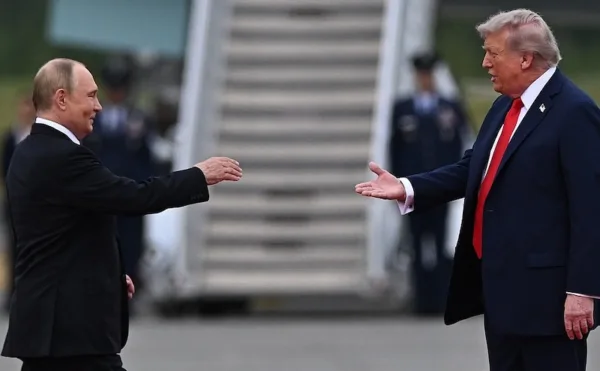
Last week, the U.S. not only shot down a Syrian jet but also eliminated a few drones operated by Damascus, resulting in significant tension between the U.S. and Russia after statements were made by the Russian government protesting these actions. In the coming days and weeks, the issue will become more complicated as the Iran-backed militia supporting the regime is trying to expand its zone of influence toward eastern Syria. In these circumstances, control of the operation on the ground has become more difficult. The complexity of the situation demonstrates that there can be many unintended consequences of the operation toward Raqqa.
More significantly in this complex situation, many actors in the region know that there is still no sophisticated strategy of the U.S. administration toward Syria. Until this is achieved, these actors may try to take advantage of the situation. In the absence of strategy, the outcome of the reaction of the U.S. to these different actions is hard to predict. Thus, the U.S. administration should already know that not having a strategy is not the best way to go and inaction is not the least risky approach to the conflict. There are too many variables and too many actors involved in this conflict. More significantly, there are too many loose parts. The continuation of the U.S.’s lack of strategy may generate a serious risk for the region, for U.S. security interests and for international security. This would dramatically embolden terrorist groups and actors trying to destabilize the whole region. To prevent this, the Trump administration needs to bring together a strategy with the active support of U.S. allies. This strategy needs to be formulated and implemented in a way that will end the confusion and ambivalence of the international community.
This article was first published in Daily Sabah on June 23, 2017.