What Spider-Man and the Odyssey tell us about American power
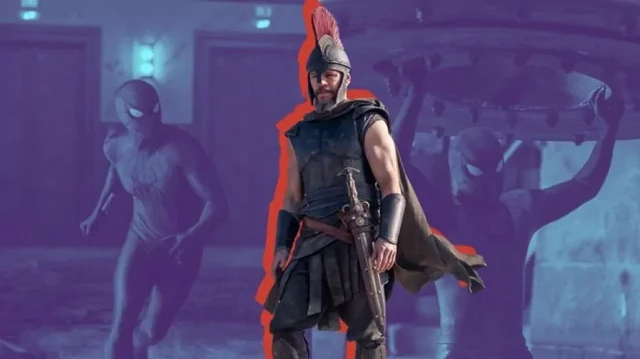
Reading the summer blockbusters ‘Spider-Man: Brand New Day’ and ‘Odyssey’ through the lens of American foreign policy offers important clues about the country’s self-perception, its fears, its self-confidence, and the debates surrounding its international role. At first glance, these two films may seem quite different from each other, but in fact they stand out as stories that touch on fundamental issues of foreign policy: the use of power, the consequences of war, the definition of friend and foe, and coexistence with difference. Tobey Maguire’s Spider-Man left us with the enduring message that ‘with great power comes great responsibility.’ With Holland, the idea that ‘different doesn’t have to mean enemy’ has been added to that formula. This can be read as a cultural projection of America’s transition from a unipolar era to a more plural and harder-to-manage international system. Nolan, in Oppenheimer, questioned the consequences of possessing a power as great as the nuclear bomb; in Odyssey, he focuses on how the trauma and destruction caused by the use of that power transforms even the victor.
With great power comes great responsibility
The most important lesson learned by Tobey Maguire’s Peter Parker was that his extraordinary power came with great responsibility. His Uncle Ben’s famous line, ‘with great power comes great responsibility,’ became one of the most recognized formulations of the American heroic narrative. Uncle Ben’s formula carried a striking parallel to the debate over whether America’s global power—as the sole superpower after the Cold War—brought with it moral responsibilities. Arguments were made that America could not remain indifferent to events in Bosnia and Kosovo, and that the world’s most powerful state must uphold the international order, while others countered that America could not be the world’s policeman. Just as Spider-Man must use his power for good, America could not shy away from action when necessary.
However, the gap between the capacity to use force and the ability to control its consequences became much more visible in the post-9/11 wars. The issue Nolan explores in Oppenheimer is precisely that possessing immense power does not mean being able to control its consequences. The extremely difficult scientific problem of whether the atomic bomb could be produced was solved through the mobilization of the American state’s economic and technological capacity, unleashing a destructive power unprecedented in history. But this “success” brought with it questions about how that power would be used, whether its consequences could be controlled, and what kind of world would emerge when rivals acquired the same capability.
Nolan focuses not only on the extraordinary destructiveness of the nuclear bomb, but also on the inability of those who created it to control its consequences. Oppenheimer and his colleagues’ scientific achievement marked the beginning of a much more politically difficult process. Examples of this can be seen in American foreign policy over the last quarter-century. America succeeded in quickly toppling the Taliban regime and Saddam Hussein’s regime, and developed the intelligence and technological capacity to target terrorist leaders anywhere in the world. However, these military and technological advances did not produce the desired political outcomes, nor did they establish a stable and sustainable order in the region. This gap between what power can do and what it can permanently change is the central theme of Nolan’s Odyssey.
After the victory
Odysseus stands out as the architect of a brave and epic war stratagem, and as one of the victorious commanders of the Trojan War, he represents the winning side. But in Nolan’s telling, the real story begins here, and the physical challenges of the journey home after this great victory, along with the trauma of war, guilt, the moral weight of what happened, and the difficulty of returning to his former life, truly transform Odysseus. In Oppenheimer, Nolan focuses on the historic moment when power was achieved and the extent to which those who created it could grasp the consequences of their actions; in Odyssey, he questions what it means to live with the aftermath after that great power has been used and victory has been won.
It is possible to consider America’s experiences in Iraq, Afghanistan, and even Iran within this framework. Although Washington was successful in military operations in Iraq and Afghanistan, it failed to achieve the political outcomes it wanted after the wars. The ongoing war with Iran raises the same question: Will America’s military superiority be enough to produce the political result it wants? Despite initial success in military operations, the lack of “day after” planning and the inability to manage unforeseen primary and secondary consequences create a process that also transforms the “victorious” power.
Washington’s struggle to produce the desired political outcomes despite achieving its initial military objectives has deeply shaken confidence in foreign policy elites. Faith in the ability of military power to solve political problems and America’s capacity to bring order to the world has also been significantly eroded. As Odyssey shows, warriors do not return home the same as when they left. America, too, has not emerged from more than two decades of wars as the same country. The economic, political, and social costs of these wars have been instrumental in the American public’s distancing from the idea of global moral responsibility, and in the growing conviction that military interventions only produce endless wars.
Is difference a threat?
Tom Holland’s Peter Parker, in addition to questioning how a power-holder should use that power, also questions how one decides against whom to use it. Jean Grey is initially presented as an unpredictable and dangerous character, while Damage Control tries to contain and neutralize her. As the story progresses, it becomes clear that Jean’s anger is further sharpened by the system’s manipulative interventions, and Spider-Man develops an approach that seeks to understand her trauma rather than destroy her—even risking taking a bullet for her. The story, which questions the attempt to define the different or the unknown as an enemy to be eliminated, offers a powerful metaphor for threat perception and security reflexes frequently encountered in American foreign policy.
The tendency of great powers like America to see actors with different systems, ideologies, and regional visions as potential threats is a familiar theme. It is clear that China will not adopt American liberalism, and countries like Türkiye, Saudi Arabia, Brazil, and Indonesia want to focus on their own strategic priorities. America’s European and Asian allies are also seeking greater strategic autonomy. Of course, as in the case of Russia, difference can combine with genuine aggression. The challenge is precisely to distinguish between difference and real threat. Rapidly changing global dynamics raise, beyond the question of how responsibly America will use its power, the question of what kind of order Washington will establish with actors who think differently and are unlike itself.
There are, of course, real threats and bad actors in the international system, but distinguishing between difference and real threat is critical. If this distinction cannot be made, a great power, while trying to secure itself, may reinforce the threat perception of the other actor and create a security dilemma that actively encourages the very behaviors it seeks to prevent. Thus, using power responsibly requires not only deciding when to act, but also correctly determining what truly constitutes a threat. The Spider-Man who, in the Maguire era, confronted the dilemma of power and responsibility, with Holland, raises the issue of coexistence with difference.
The limits of power
Nolan’s films and Spider-Man’s transformation intersect at this point. Oppenheimer reveals the difficulty of foreseeing the consequences of possessed power, while Odyssey shows that military victory is not the end of the story—the real political and human problems begin after the victory. Spider-Man, meanwhile, points out that misidentifying the actor on the other side only exacerbates the problem, leaving the system to fight ghosts of its own making. These films, of course, were not made to convey messages about American foreign policy, but it can be said that they reflect the transformation of anxieties in American popular culture regarding the country’s power, identity, and international role.
In recent American heroic narratives, victory appears increasingly less clean and final. Defeating the enemy does not solve the problem, and possessing power does not mean being able to control its consequences. Defining difference as a threat does not guarantee security either. Odyssey reminds us that winning a war does not guarantee coming home, and Spider-Man reminds us that being powerful does not mean making everyone like oneself. The central question facing American foreign policy lies precisely here: Can America be a power that uses its strength responsibly, manages the consequences of its use, and coexists with actors different from itself?
You may also like