Who’s really driving the Iran war escalation?
Posted On July 31, 2026
0
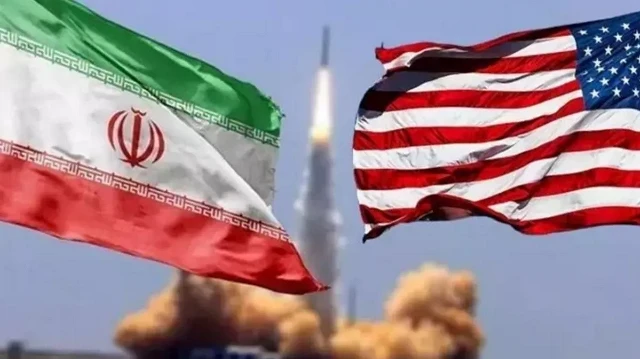
Who’s really driving the Iran war escalation? Iran’s targeting of American troops in Jordan with a ballistic missile attack stands out as a move aimed at showing that the dynamics of conflict and negotiation are not solely in Washington’s hands. When Trump announced last week that he had stopped the attacks at Iran’s request, Tehran responded by stating that there was no ongoing negotiation process. Iran appears to have responded to Trump’s move, which seemed more aimed at calming markets than achieving a new momentum in negotiations, with the Jordan attack. Iran is trying to change the situation where Trump manages the conflict-negotiation dilemma as he wishes, benefiting from market calm without paying a political price for it. However, since this move will not be enough for Iran to take the initiative in steering the dynamics of the conflict, and it is certain that America will increase its attacks, how effective this strategy will be is debatable.
ESCALATION STRATEGY
The fact that Iran’s effort to disrupt Trump’s ‘game’ of steering the conflict as he wishes took place on the days when Netanyahu was in Washington carried the message that Tehran would also decide on the timing of the escalation strategy. The Jordan attack, which was a preemptive response to the message emerging from the Trump-Netanyahu meeting and a ‘field’ response, aimed to show that the dynamics of war are not entirely dependent on America and Israel. Iran, which claims that America continues to build up its military forces, seems to have wanted to remind that the cost of an all-out war would be high. It is clear that Iran is trying to give several different messages to America through this limited attack, but it is difficult to say that it has achieved any concrete strategic gain.It is not very plausible to think that Iran’s attempt to force America into diplomacy in this way will be effective, because whenever the escalation strategy fails to produce the desired political outcome, the strategy will become ineffective and the cost will increase. The fact that America immediately launched airstrikes in response to the Jordan attack shows that Iran has not achieved any deterrence. It may be giving the message that operations to reduce the psychological impact of the closure of the Strait of Hormuz will not work, but it can be said that the impact of this message will be short-lived. Markets certainly react sharply to conflict news, but the closure of the Strait of Hormuz is gradually becoming normalized. This could mean that the value of Iran’s most important card may diminish over time.REGIONAL WAR
It can be said that the regional struggle between Iran and Israel has already drawn both America and regional countries into a low-intensity regional war in different ways. However, Gulf countries continue to resist entering direct war alongside America and are trying to give military responses to Iran within defensive limits. It is highly likely that many regional countries have participated in military operations alongside America in covert operations, but the Iran war has not yet turned into a full-fledged regional war, at least for now. However, the responses given by Saudi Arabia in Iraq and Yemen to attacks on its oil infrastructure show that regional escalation is not far off.The UAE’s withdrawal from OPEC and work on the Fujairah pipeline, Saudi Arabia’s efforts to develop a Red Sea alternative instead of the Strait of Hormuz, and Oman’s offer of oil storage alternatives stand out as initiatives aimed at mitigating the impact of the Hormuz crisis. While it is certainly not possible to substitute the Strait of Hormuz in the short term, spreading the impact of the crisis across the region and adapting to high oil prices could weaken Iran’s leverage. On the other hand, Tehran’s insistence on Iranian sovereignty over the Strait of Hormuz is making regional countries part of the war, directly or indirectly. It is not possible to say that this equation creates an advantageous position for Iran. We can say that the regional struggle between Iran and Israel has already turned into a regional war that directly or indirectly affects and draws in all regional countries.In the coming period, it would not be surprising to see the conflict-negotiation-conflict dynamic continue with constantly changing intensity between America and Iran. Trump does not have the support to enter an all-out war, nor does he have the political tolerance to make a comprehensive agreement. Although there are harsh statements from the Trump administration against Israel, his reluctance to fully confront Netanyahu is one of the biggest obstacles to a deal with Iran. There is also resistance from the American public to a path toward invasion, and opposition to expanding the war from both parties.In this picture, Trump’s occasional raising of tensions to show that he holds the escalation initiative, and Iran’s attempts to disrupt this dynamic and force Trump to the table, become more understandable. However, the risks of these mutual fluctuations creating an uncontrollable escalation spiral and dragging the region into an open war are by no means low. The inability of either side to form an effective and result-oriented strategy makes the situation fragile and open to accidents and unexpected developments. The increase in dynamics that deepen regional instability indicates that even if the war stops from time to time, it will not clearly end.