Who’s responsible for the situation in Palestine?
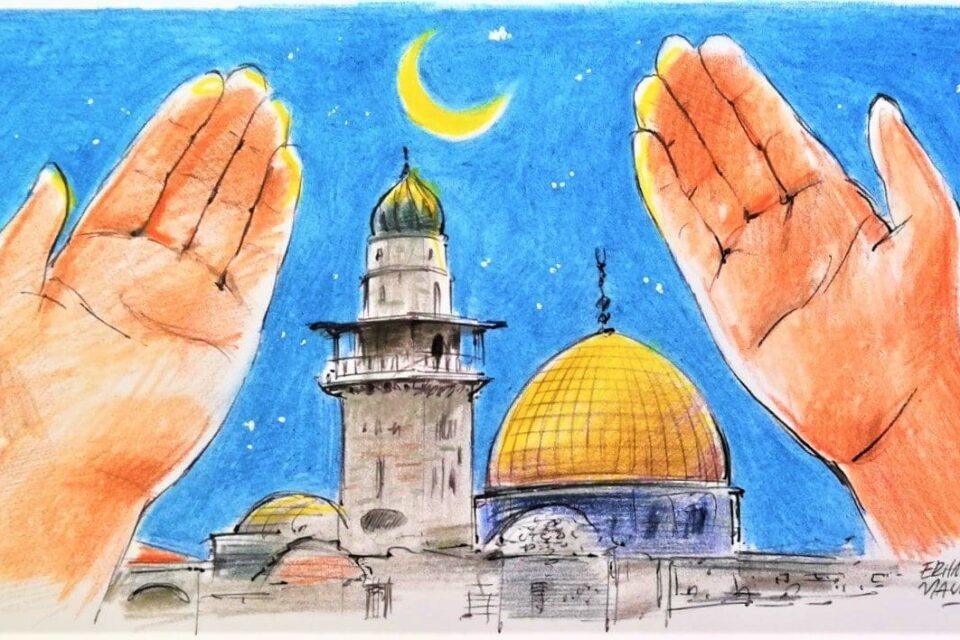
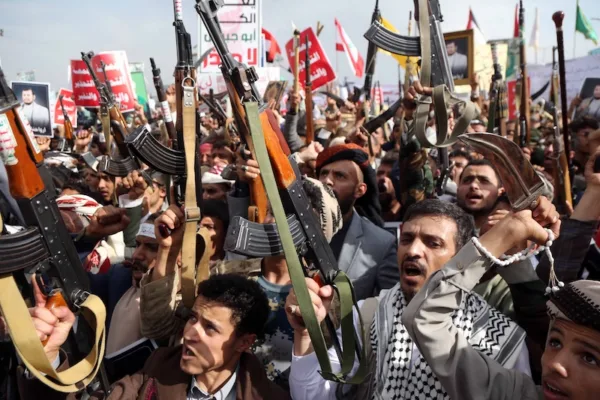
Israel continued bombing Gaza on the second day of Ramadan Bayram, also known as Eid al-Fitr. At least 197 Palestinians have been killed in the attacks according to the latest tally. Unfortunately, that number may be even higher by the time you read this article. There is just one important question on everyone’s minds: “Who’s going to stop Israel?”
We keep thinking who could stand in the way of Israel’s civilian massacres, its ever-expanding occupation of Palestinian lands, and the Judaization of Jerusalem.
We also remember that all supporters of the apartheid regime in Tel Aviv, along with those failing to adequately speak up against it, are complicit in the violence against Palestinians.
Sometimes, we blame the United States for using its veto power consistently, to defend Israel at the United Nations Security Council (UNSC).
Other times, we criticize the European Union for pretending to be powerless or blame the Arab regimes that “sold out” the cause of Palestine and Jerusalem.
On other occasions, we complain about the fragmentation of the Islamic world and the ummah – or its lack of existence.
Some observers even criticized Foreign Minister Mevlüt Çavuşoğlu’s completely justified remarks, “We keep issuing condemnations, but the ummah expects us to take action.” They asked which ummah exactly expects us to take action, recalling ongoing conflicts among Muslims themselves.
Who is responsible and to what extent? We should not allow this multidirectional questioning to cause confusion over the lines of responsibility. We should, however, engage in realistic assessments without spreading despair or using facts against each other.
Six ranks to analyze
Here’s how we should rank those responsible for the killing of Palestinians in Jerusalem and Al-Aqsa Mosque and those partaking in acts of “state terrorism“:
- The State of Israel and it’s Prime Minister Benjamin Netanyahu, for their complete disregard of international law.
- The U.S., for endorsing Israel’s oppression at every turn.
- International organizations and their prominent members – specifically, the permanent members of the UNSC and the EU.
- The Organisation of Islamic Cooperation (OIC) and its members, who seemed to have forgotten that it was established over Jerusalem and Al-Aqsa Mosque, as well as the Arab regimes and the region’s leading nations.
- The Palestinian leadership, for failing to form a united front even when the oppression becomes more intense.
- The international community, for ignoring that Jerusalem is home to the holy sites of Muslims, Christians and Jews.
Why does that ranking matter? Clearly, ranking those responsible for the current situation would not deter Israel’s oppression or heal our wounds. However, it enables us to tackle the question at hand from the right angle and stops us from unnecessary confusion.
The UNSC’s permanent members, starting with the U.S., represent the only authority with the potential to discipline Israel. Tel Aviv will not end its occupation and oppression unless and until those five nations jointly agree to compel it.
Let us not forget that it was Israel’s apartheid regime that scrapped each peace plan that the U.N. and the U.S. proposed. The Arabs repeatedly waged war against Israel, only to lose due to U.S. and Western support for Tel Aviv.
For the record, the Arab regimes cannot possibly defeat Israel militarily, a nuclear power, today. I do not make that point to absolve those Arab leaders, who aligned themselves with Israel and targeted each other.
Muslim environment
The fragmentation and helplessness of Muslim countries is deeply unsettling. Yet those nations are not the dominant powers under the current international order either. Nor are they in a position to solve the question of Israel – that the colonial powers, which brought down the Ottoman Empire, created and to which the U.S., the post-World War II superpower, made a commitment.
As such, let us criticize each of those players according to their place in the ranking.
Let me add that I take issue with the fact that Turkey’s secularists keep asking where the ummah is, whenever the question of Jerusalem comes up.
It is no secret that there is no singular Islamic world in terms of political unity. Indeed, the term “Islamic world” have traditionally been used to reference “religious and cultural identity.”
Today, the OIC suffers from inaction, as Muslim leaders, with the notable exception of President Recep Tayyip Erdoğan, lack influence. That Muslims themselves have expectations, however, is actually a good thing.
It is the power of their expectations that will compel their leaders to take action, sooner or later. Indeed, it is important to encourage people around the world – those who did not trade human values for racism, like Austrian Prime Minister Sebastian Kurz – to demand action for Palestine and Jerusalem
The spirit of marabouts will stay alive in Palestine, as long as that expectation remains strong.
This article was first published by Daily Sabah on May 18, 2021.
You may also like