Fidan’s Visit to Washington and Türkiye’s Strategic Autonomy

Foreign Minister Hakan Fidan’s visit to Washington took place at a pivotal moment when the U.S. is redefining its foreign policy priorities. As the restructuring of the international system accelerates, countries like Türkiye—capable of responding swiftly and effectively to regional dynamics—are poised to seize new opportunities. Meanwhile, nations accustomed to the comfort of American-led Western alliances struggle to adapt. With Donald Trump’s return to power, it is clear that transatlantic relations will not continue as before. As the U.S. seeks to reduce the costs of global leadership, regional powers like Türkiye are gaining greater room for maneuver. By leveraging the strategic openings created by this structural shift, Türkiye can strengthen both its ties with the West and its regional influence.
Türkiye-U.S. Relations: Beyond Bilateral Ties
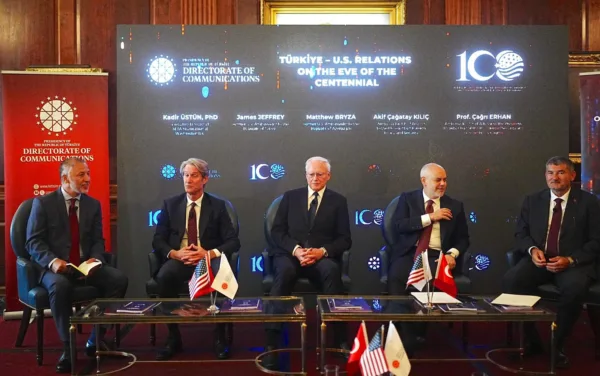
The significance of Türkiye-U.S. relations extends far beyond ordinary bilateral ties. As home to NATO’s two largest militaries, their policies critically shape the alliance’s future. Their approaches to Ukraine not only determine security in Europe and the Black Sea but also influence the broader U.S.-Russia-China power struggle. Similarly, their Syria policies directly impact the foreign policies of Iraq, Jordan, and Israel—a dynamic echoed in the Caucasus and Africa. Even on multilateral platforms like the UN, NATO, and the G20, the priorities of Washington and Ankara carry substantial weight.
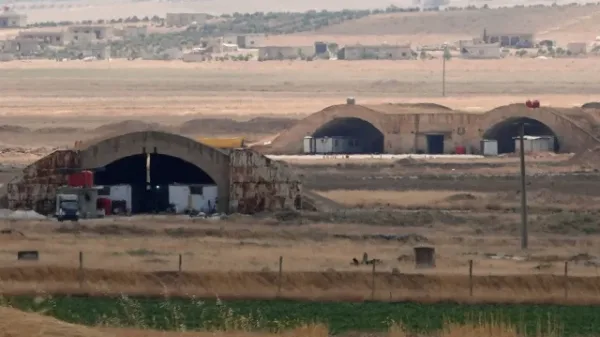
What sets Türkiye apart is its strategic autonomy. Unlike many nations that passively align with U.S. policies, Türkiye asserts itself as an independent actor. When Russia invaded Ukraine, Türkiye acted decisively—closing the Bosporus to Russian warships while pushing for diplomacy, all without waiting for Washington’s cue. In Syria, where the international community turned a blind eye, Türkiye persisted with humanitarian aid, opposition support, military operations, and diplomatic engagement. Its refusal to back down—even at the cost of clashing with the U.S. over its support for the YPG (the PKK’s Syrian affiliate)—proved the value of strategic autonomy.
Managing Disagreements Through Self-Reliance
The resilience of Türkiye-U.S. relations amid profound disagreements stems from Türkiye’s ability to craft its own policies. While many European nations, long accustomed to following Washington’s lead, now grapple with “Trump shock,” Türkiye moves forward with confidence. When the U.S. opted to fight ISIS through “local partners” like the YPG instead of deploying its own troops, Türkiye countered with its own successful strategy. Recognizing that NATO allies might not fully back it against threats from Syria, Ankara invested in its defense industry, achieving near self-sufficiency. By developing its strategic priorities and military capacity, Türkiye has emerged as a genuine alternative to U.S. policies.
Strategic Autonomy: Türkiye’s Winning Hand
Under President Erdoğan’s leadership, Türkiye’s strategic autonomy has become its strongest asset in an era of systemic upheaval. Europe, accustomed to relying on U.S. leadership for its security, Middle East stability, and global power competition, now realizes this model is unsustainable under Trump. Lagging behind Türkiye in both defense infrastructure and strategic independence, Europe must urgently close this gap—and it increasingly recognizes Ankara’s critical role in shaping a new security architecture. Like Türkiye, Europe must learn to assert its own policies, even at the risk of friction with Washington, while pushing for cooperation where possible.
The same imperative applies to the Middle East. With U.S. policies rigidly centered on Israel’s security, regional states must take greater initiative. Israel’s efforts to expand the Gaza war into Lebanon and Iran, coupled with the fallout from Assad’s fall in Syria, underscore the impossibility of stability through mere alignment with Washington. While Arab states’ steps toward Gaza and Syria’s reconstruction are promising, these efforts need a strategic framework for regional security—a space where Türkiye, with its diplomatic outreach to the OIC and Arab League, is uniquely positioned to lead.
The Road Ahead
In the coming years, Türkiye will be a linchpin in redefining security architectures—both in Europe and the Middle East. As Trump’s America alienates Western allies, nations unaccustomed to envisioning security without U.S. leadership will face a steep learning curve. Yet in a world where regional initiatives gain prominence, Türkiye’s role will only grow more indispensable.