Potential Nuclear Deal with Iran
To reach an agreement with Iran has been one of the main foreign policy goals of the Obama administration and its attainment will mark a major instance in the foreign policy of the U.S.
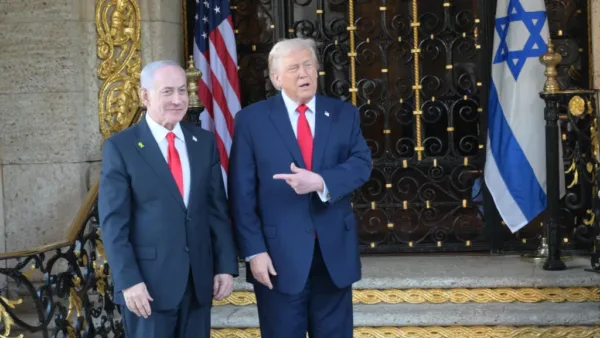
In the last week, especially during Israeli Prime Minister Benjamin Netanyahu’s controversial visit to Washington, D.C., the main topic on the foreign policy analysts’ agenda was the Iranian nuclear deal and its potential impacts for the region. Despite some leaks from the meetings between Iran and P5+1, other than some outlines and technical debates about the number of centrifuges and nuclear infrastructure there still isn’t a finalized text in regards to an agreement between the parties. (Of course it will be right to remember what could be different if the Tehran Declaration among Turkey, Brazil and Iran was taken into consideration earlier.) To reach an agreement with Iran has been one of the main foreign policy goals of the Obama administration and its attainment will mark a major instance in the foreign policy of the U.S. The agreement of course will bring a lot of debates about U.S. politics, Iran and nuclear non-proliferation.
Regardless of its content, the nuclear deal may be a major turning point in U.S. foreign policy and its code of conduct in the Middle East. The deal will also however impact the domestic politics in the U.S., between Republicans and Democrats and between the Congress and the White House. The rift during Netanyahu’s speech was the first sign of this potential dispute. Next, this issue will be on the agenda during the debates among the presidential candidates in the 2016 elections. It will not be surprising to see that Republican candidates make statements against a deal. A more significant dimension will be the opinion of Democratic candidates, most probably Hillary Clinton’s opinion about the Obama plan.
The regional ramifications of such an agreement (although for some it is very farfetched) will be more interesting. A potential agreement will also have serious impact on regional geopolitics. In a recent assessment of global economy and geopolitics Eurasia Group indicated the relations between Iran and Saudi Arabia one of the riskiest issues of 2015. According to this report the nuclear dimension of the agreement will be one of the trickiest dimensions. The report argued that “If Washington imposes harsh new sanctions in response, Tehran will adopt a more aggressive regional policy, including towards the Saudis. If the diplomatic process settles on a “long-term interim agreement,” raising expectations for an easing of sanctions on Iran, Saudi Arabia will feel exposed and more aggressively protect its regional turf. Even a partial agreement would heighten Saudi neuralgia about American commitment to its security. If a comprehensive deal is reached, an improbable but possible outcome, the Saudis’ worst nightmare would become reality. Saudi leaders believe a deal would lead to a U.S.-Iran rapprochement that will both undermine Saudi security and turn Iran into a rising geopolitical and economic power. In turn, the Saudis would quickly ramp up support for its proxies to cut Iran down to size.” The fate of this agreement will of course also impact the regional arms race in the Middle East and recent debates about a potential cooperation between U.S. and Iran against ISIS will also complicate the equations in the region. It will be a complicated scene for regional geopolitics.
The agreement will also be a key for Iran to reintegrate itself to the international system. Despite its increasing clout in the region, most importantly through the actors and proxies that have been supported and financed by the regime in Iran, the favorability of Iran in the region is increasingly declining. Although some in Iran considered the country as an axis of resistance, by its support to status quo during the Arab Spring it deeply contradicts with the revolutionary history of the country. Reintegrating itself to the world while isolating from the region will not bring any form of good for Iran. Because of that in addition to its negotiations with the United States, the Iranian regime needs to adopt a more constructive role in regards to the conflicts in the region. The fate of the nuclear deal is not clear but it is for sure that Iran will stay in the region and the peace and stability in the region will greatly contribute for the wellbeing of the country and its people.
This article was originally published in Daily Sabah on March 9, 2015.
You may also like