From economic encirclement to hot war: Washington’s Iran strategy
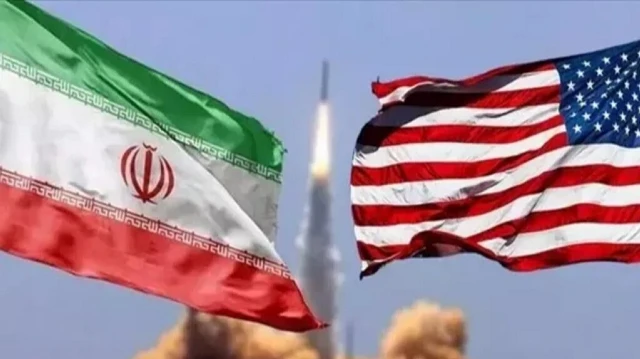
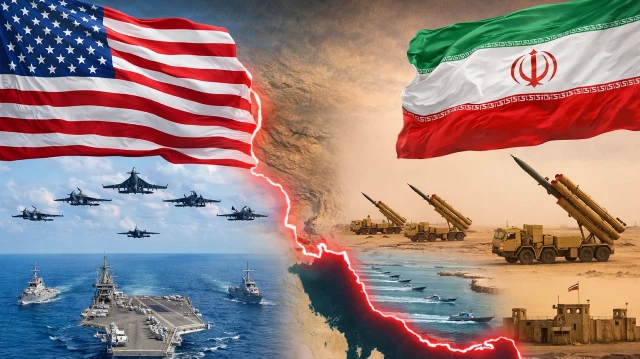
On August 24, the Trump administration signaled its shift toward an encirclement policy by declaring an ‘economic D-Day’ against Iran, and has since shown that this strategy can be supported by military conflict from time to time. The resumption of American attacks a few days later, and Iran’s retaliatory missile strikes on American bases in the region, indicate that low-intensity continuous warfare will proceed in tandem with the economic encirclement policy. In other words, Washington does not see a transition from economic war to hot war; rather, it views both wars as two separate pillars of the same strategy.
Under the Economic D-Day, new measures were announced targeting Iran’s oil revenues, financial connections, and trade networks that circumvent sanctions. While sectors such as crypto assets, gold, technology, aviation, and maritime were threatened with secondary sanctions, countries and institutions doing business with Iran once again faced the threat of exclusion from the American financial system. Iran’s refusal to submit to Washington’s attempt to use its frequently applied sanctions regime as part of a full economic encirclement strategy indicated that such pressure would prove insufficient.
TWO-PRONGED STRATEGY
Treasury Secretary Scott Bessent said that all of Iran’s economic lifelines would be cut and that it would be isolated globally. However, the announced measures did not contain the sudden and devastating blow implied by the D-Day analogy. While approximately 60 individuals, companies, and ships were placed on the sanctions list, Chinese banks that enable Iran’s oil trade were not touched, and third countries were given time to cut their ties with Iran. Of course, Washington’s cautious approach is understandable, given that comprehensive secondary sanctions targeting countries like China and India could shake not only Iran but also the global financial system and oil markets. In trying to strangle Iran, the Trump administration did not want to trigger an uncontrollable crisis in the global economy.
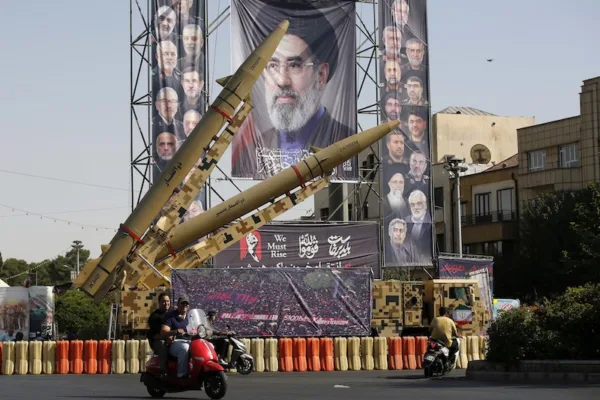
On the other hand, it is known that economic pressure can take months or even years to produce political results. Trump, however, wanted the immediate opening of the Strait of Hormuz, a reduction in Iran’s military capacity, and Tehran’s return to the negotiating table. This is why we have seen American military options being reactivated. The latest American strikes can be read not as a failure of the economic strategy, but as a reinforcement of economic encirclement with military power. We have seen Washington’s message: sanctions will take time to produce results, but in the meantime, Iran will not be allowed to develop new missile, radar, and mining capabilities in the Strait of Hormuz.
IRAN’S RESPONSE
Iran’s refusal to respond to economic warfare with purely economic tools has also facilitated the shift toward war. While America deploys the advantages of the dollar system and secondary sanctions, Tehran uses the Strait of Hormuz and American bases in the region as leverage. The heavy pressure on Iran’s economy has contributed to inflation reaching 66 percent levels and a reduction in foreign trade by approximately one-third. Iran also prefers to impose costs on the global economy. Disrupting tanker traffic in the Strait of Hormuz raises oil prices, exporting economic hardship to global markets, Gulf countries, and America.
It can be said that economic pressure, rather than pacifying Iran, is pushing it to take even greater risks. Iran no longer sees the American strategy as merely an attempt to extract concessions on its nuclear program, but believes it is a full-blown regime-change war. The Trump administration’s rhetoric about collapsing Iran’s economy and weakening the regime through social unrest has transformed the issue into a matter of regime survival for Tehran. As Washington speaks of economic pressure and encirclement, Tehran interprets this as an expression of commitment to a long-term war with the ultimate goal of regime change.
The American military’s strikes on targets allegedly to be used by Iran for mining operations in the Strait of Hormuz signaled a return to war by creating a new phase of conflict. We have seen that economic pressure was deemed insufficient and that economic encirclement will not be considered separate from the continuity of war. In the coming period, it can be said that the war will turn into a war of attrition consisting of economic blockade, naval operations, and periodic airstrikes. However, since it seems unlikely that Iran will accept the normalization and permanence of these dynamics, the need to increase regional and global economic costs arises with each military conflict.
Tehran’s resort to escalation in the face of the American strategy’s evolution toward full pressure—both economic and military—makes the situation even more dangerous. In such conflicts, where mutual limited strikes are conducted in a controlled manner, the possibility that any retaliation could cause more casualties than expected should not be overlooked. American pressure appears to aim at systematically increasing economic and military pressure in a controlled manner. In contrast, Iran’s perception of this pressure as an existential attack on the regime leads it to respond militarily and escalate more quickly. In an environment where there are no diplomatic talks, the risk of escalation increases. As Washington’s Iran strategy moves toward increasing economic and military pressure, the absence of incentives to bring Tehran back to the table shows that a lasting solution is far off.
Yeni Safak / September 6, 2026
You may also like