Nuclear developments on the Washington-Riyadh axis
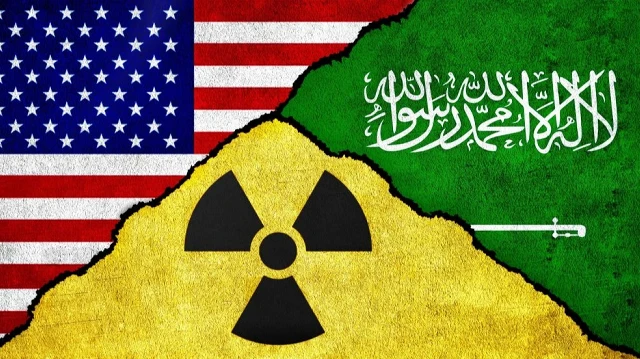
The nuclear cooperation agreement signed by the Trump administration with Saudi Arabia has the potential to change the balance of power in the Middle East in the medium and long term. The Saudis will not acquire nuclear technology immediately, and even building nuclear power plants will take years, but the agreement opens the door to becoming a “nuclear threshold” state in the future. The Saudis naturally want to possess peaceful nuclear technology for electricity generation and energy diversification, but the fact that the path to uranium enrichment has not been clearly closed means that a technology that has been cited as a reason for war with Iran could be given to the Saudis under American supervision. Opening this path to the Saudis against Iran, which possesses uranium enrichment capability and has become a nuclear threshold country, is of a nature that will reshape regional power balances.
CONTENT OF THE AGREEMENT AND CRITICISMS
The agreement, which is expected to remain in force for thirty years, allows American companies to develop a civilian nuclear program in Saudi Arabia. The American firm Westinghouse is expected to produce billions of dollars worth of nuclear reactors. While infrastructure for civilian energy production is being permitted, it is noteworthy that the Saudis have not been required to refrain from uranium enrichment and reprocessing of spent nuclear fuel. The fact that a standard such as the unconditional commitment given by the United Arab Emirates in the past to refrain from such activities has not been applied to the Saudis is generating controversy.
According to the agreement, the United States and Saudi Arabia will study for two years whether uranium enrichment is necessary and economical. If enrichment is decided upon, it is envisaged that the facilities will be built and operated by American companies and that sensitive technologies will be withheld from Saudi personnel. This model, described as a “black box,” gives the impression that the Saudis will not have access to this technology unless America permits it, but it also indicates that this decision could change in the future. This clause may have been added to facilitate the agreement’s approval by the US Congress, which will demand guarantees, but despite this, it appears to provide broad flexibility to future American administrations.
Another criticized aspect of the agreement concerns the inspection of nuclear facilities. Saudi Arabia’s being a party to the Non-Proliferation Treaty (NPT) ensures that the facilities are subject to routine inspection by the International Atomic Energy Agency (IAEA). However, since Saudi Arabia has not signed the Additional Protocol, which allows for the investigation of ‘undeclared’ facilities in NPT member countries, it will not be subject to such inspections. Instead, facilities established through Saudi-American cooperation may be inspected by the United States, but the agreement does not provide for US authority to inspect the entirety of Saudi Arabia’s nuclear program.
NUCLEAR FOR THOSE WHO GET ALONG WITH AMERICA
The fact that America, despite years of not accepting Iran’s uranium enrichment, applies a different standard to the Saudis means that powers that get along with Washington may be exempt from some of the obligations stipulated by international agreements and norms. While comprehensive IAEA inspection of Iran’s nuclear facilities is required, the fact that the Saudis will only be subject to American inspection will strengthen accusations of double standards. The privileged treatment of American allies once again showed that the Trump administration can flex international rules and norms in favor of countries it considers allies.
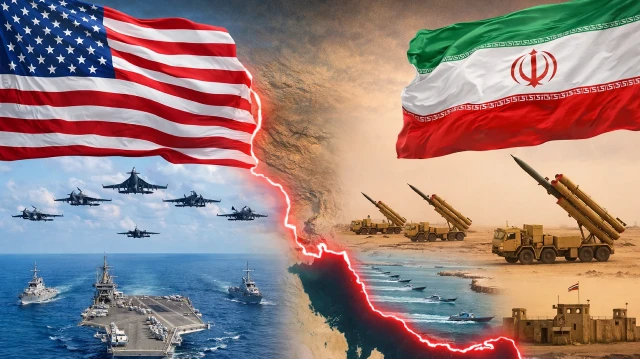
We can say that America is aiming to balance Iran’s program by giving nuclear technology to the Saudis, but it would not be surprising if this backfires. Iran, while nuclear technology is being transferred to the Saudis, would not even consider abandoning its program; on the contrary, it could decide that the program must be protected at all costs. If the aim is to deter Iran through the Saudis (and it appears to be so), this goal may not be achieved and, instead, a race for nuclear threshold status in the region could be triggered. Iran’s refusal to abandon its nuclear program had brought such pursuits to the agenda, but the US-Saudi agreement represents the concretization of this pursuit.
America’s transfer of nuclear technology to the Saudis, who get along with it and will make money for American firms, will not change the military balance in the short term, but it will increase the Saudis’ regional weight in the medium and long term. It is possible that the Saudis may also be articulated into the Israel-Iran nuclear tension equation. Moreover, countries like Türkiye and Egypt may both want to reassess their own nuclear capacities and will be uncomfortable with the change in the regional balance of power. Although it does not fully meet the defense guarantees the Saudis have long sought, it is clear that this agreement provides a political guarantee.
THE ISRAEL CONDITION AND THE REGIONAL RACE
While the Biden administration was negotiating a defense agreement and nuclear technology with the Saudis, it made these conditional on normalization with Israel, but we see that Trump has decoupled these files. Saudi Arabia, which obtained this agreement without recognizing Israel and without making any explicit concessions on Palestine, did not receive a full mutual defense pact from America, but it is not difficult to predict that this agreement will function as a strategic insurance. The Trump administration is not giving nuclear weapons to the Saudis and is deferring the issue of uranium enrichment, but in the end, it is making a critical strategic move by opening the path to becoming a nuclear threshold state.
Washington used to prefer to give security guarantees to its allies without giving critical technologies, but since these guarantees are no longer considered credible, it is trying to manage balances by providing controlled nuclear capacity. While this policy has the potential to bind countries like Saudi Arabia much more tightly to Washington, it is not difficult to foresee that it will cause a new nuclear capacity race in the Middle East. This equation will both make a solution to Iran’s nuclear issue more difficult and strengthen the pursuit of threshold state status by different countries. It is clear that such a rivalry will not be in the region’s interest.
You may also like